Types of Backlinks: The Honest 2026 Guide (With Real Data)
Types of Backlinks: The Honest Guide (With Real Data From 1.4 Billion Links)
Here’s a secret most “types of backlinks” articles won’t tell you: the list itself is the least important part. Anyone can rattle off twelve link types. What actually matters — the part that decides whether your rankings move or your money burns — is understanding which types carry real weight, which are decorative, and which can quietly hurt you.
So let’s skip the fluff and start with the answer.
The short answer: Backlinks fall into two big families — earned links (editorial mentions, digital PR coverage, organic citations) and placed links (guest posts, niche edits, directories, comments, footers). Within those, links are further classified by attribute (follow, nofollow, sponsored, UGC) and by format (text, image, file). The most valuable type is the editorial contextual link — a followed, in-content link from a relevant, authoritative page that links to you because your content deserved it.
That’s the whole game in one paragraph. Everything below is the evidence, the nuance, and the action plan.
And this isn’t theory. To write this guide, we pulled live Semrush Backlink Analytics data for shopify.com — Authority Score 84, 4.6 million referring domains, 1.4 billion backlinks. When someone shows you what 1.4 billion real links look like, patterns emerge that no listicle can teach you. You’ll see every one of those patterns below, with exact figures.
If you’re new to link building entirely, start with our White Hat Link Building 101 guide — it covers the fundamentals this article builds on.
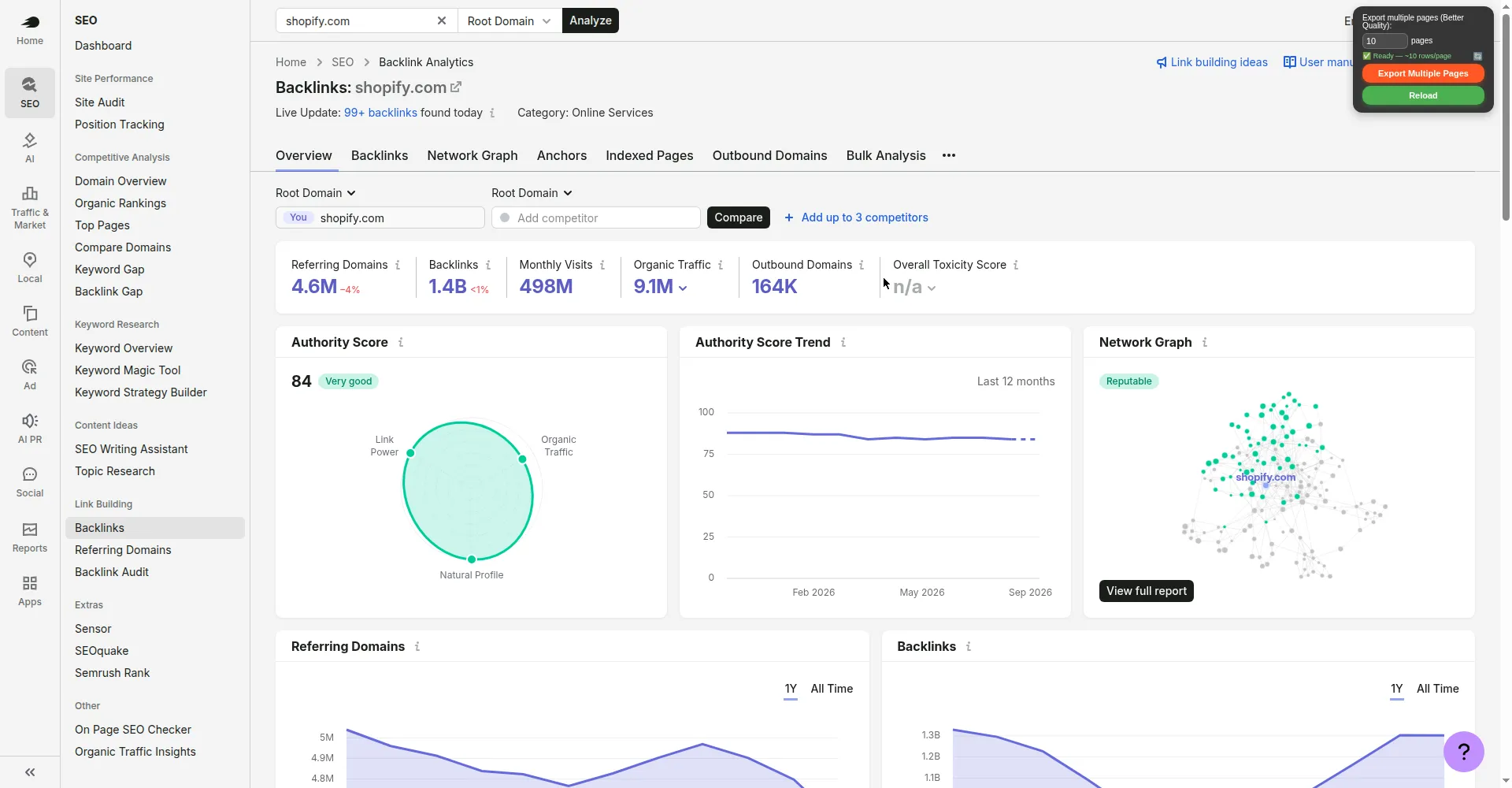
Table of Contents
- 1. The Honest Answer: Backlink Types That Actually Exist
- 2. Follow vs Nofollow vs Sponsored vs UGC: Link Attributes Explained
- 3. Editorial & Contextual Links: The Gold Standard
- 4. Guest Post Links
- 5. Niche Edits & Link Insertions
- 6. Digital PR Links
- 7. Directory, Citation & Profile Links
- 8. Forum & Comment Links: The Honest Truth
- 9. Footer, Sidebar & Sitewide Links (The Shopify Case)
- 10. Image & File Backlinks + Your Action Plan
- FAQ: Types of Backlinks
1. The Honest Answer: Backlink Types That Actually Exist
Quick — how many types of backlinks are there? If you Googled this, you got answers ranging from 7 to 17, and every list disagrees with the others. That’s your first clue that most of these lists are made up for SEO, not for you.
Real talk: there is no official taxonomy. Google doesn’t publish a “12 types of backlinks” chart. What exists in reality is messier and more useful: links differ by how they’re earned, by what attribute they carry, and by what format they take. Master those three dimensions and every listicle becomes obsolete.
So how many types of backlinks are there, really?
Honest answer? As many as you want to slice them into. But nearly every link on the internet fits into one of these ten buckets: editorial/contextual, guest post, niche edit, digital PR, directory/citation, profile, forum/comment, footer/sitewide, image, and file links.
That’s the working taxonomy we’ll use for this entire guide. Ten types. Each one gets its own chapter below — what it is, what it’s worth, and whether you should bother.
The two big buckets: earned vs placed
Before the ten types, learn the only distinction that truly matters. Earned links are given freely — someone linked to you because your content, data, or brand deserved it. Placed links exist because someone (you, an agency, a partner) put them there deliberately.
Why does this matter? Because Google’s entire ranking philosophy is built on treating earned links as votes of confidence. Placed links aren’t automatically bad — guest posts and niche edits are legitimate marketing — but they live under more scrutiny. The closer a placed link looks and behaves like an earned one, the more value it tends to carry.
Why most “types of backlinks” lists are useless
Here’s the uncomfortable truth: most articles ranking for “types of backlinks” are thin listicles written to capture the keyword, not to teach you anything. They list “social bookmarking” and “article directories” like it’s 2009. They never show you real data. They never tell you which types to avoid.
This guide does the opposite. Every type below comes with a verdict — pursue it, use it sparingly, or skip it — backed by what’s actually visible in large-scale link data.
What this guide covers (and what it skips)
We cover the ten types above, plus the four link attributes (follow, nofollow, sponsored, UGC) and three formats (text, image, file). We skip obsolete tactics that only exist in museum exhibits — article spinning, link wheels, trackback spam. If a tactic died a decade ago, it doesn’t deserve your reading time.
How to use this guide
Read chapter 2 first no matter what — link attributes change how every other type behaves. Then jump to whichever type you’re considering. Finish with chapter 10, where we rank all ten types and give you a concrete action plan. Skimmers: the comparison table in chapter 10 is your cheat sheet.
2. Follow vs Nofollow vs Sponsored vs UGC: Link Attributes Explained
Pop quiz: what’s the most misunderstood concept in all of SEO? It’s not algorithms. It’s not “domain authority.” It’s the tiny rel attribute sitting quietly inside a link tag, deciding how much of that link’s power actually reaches you.
Get this chapter wrong and nothing else in link building makes sense. Get it right and you’ll instantly see through half the bad advice on the internet.
What does “follow” actually mean?
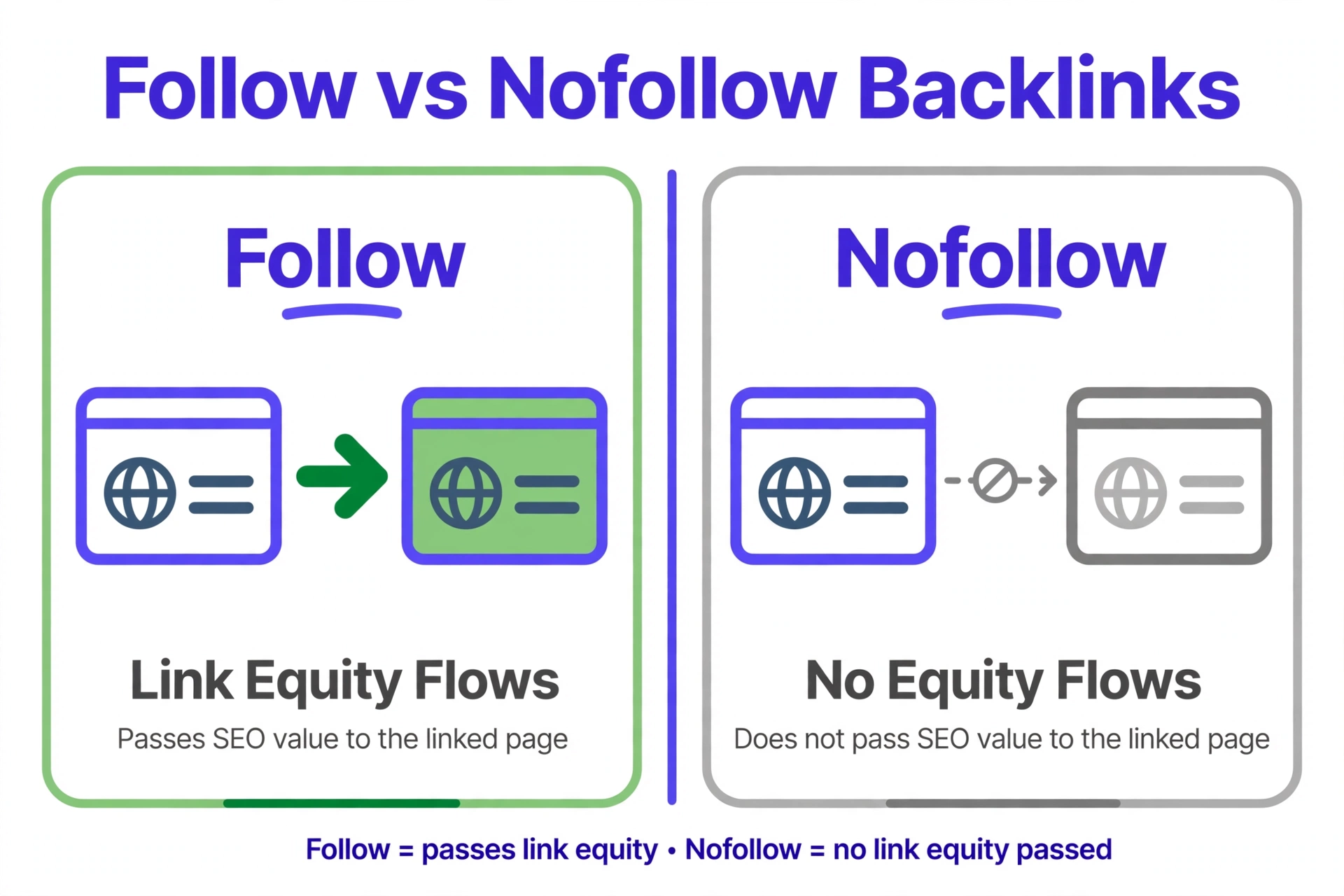
Here’s the thing nobody clarifies: there’s no such thing as a “follow” attribute. A normal link with no rel value is what people call a “follow” or “dofollow” link. It’s the default. Search engines treat it as an endorsement and may pass ranking credit through it.
This is the link type everyone wants. When SEOs say “we built 50 backlinks,” they mean 50 followed links — because those are the ones historically associated with ranking movement.
Do nofollow links pass any value? The honest answer
Nofollow tells search engines: “don’t vouch for this link.” Google has treated nofollow as a hint rather than a strict directive since 2019 — meaning it may choose to count it. But “may” is doing a lot of heavy lifting in that sentence.
Real talk: nofollow links are not worthless, but they’re not equal either. A nofollow link from a massive publication still sends referral traffic, builds brand visibility, and contributes to a natural-looking link profile. What it usually doesn’t do is move your rankings the way a followed link does. Anyone selling you nofollow links at followed-link prices is selling you air.
Sponsored: the attribute everyone ignores
rel="sponsored" marks paid links — the honest label for “money changed hands.” Google introduced it so advertisers could pay for links without violating spam policies. In practice? Almost nobody uses it correctly.
Look at the Shopify data: out of 1.4 billion backlinks, only about 303,000 carry the sponsored attribute — less than a tenth of one percent. Either almost nobody pays for links (unlikely), or almost nobody labels them (far more likely). The takeaway: the attribute exists, the compliance doesn’t, and Google knows it.
UGC: the forum and comment label
rel="ugc" stands for User Generated Content — it’s meant for links inside comments, forum posts, and anything a random visitor submitted rather than the site’s editors. In the Shopify dataset, UGC links number around 515,000 — again under a tenth of a percent of the total.
That tiny share tells you something important: most forum and comment links in the wild don’t bother with the UGC label. They show up as plain nofollow (or occasionally follow), which is exactly why Google treats comment-section links with suspicion regardless of labeling.
What Shopify’s 1.4 billion links reveal about attributes
Let’s look at the actual split from Semrush’s data on shopify.com: 71% followed (981 million) versus 29% nofollow (402 million). That’s a remarkably healthy ratio for one of the biggest sites on the internet — and it tells you what a natural, massive link profile actually looks like.
Notice what’s not there: no profile is 100% followed. Nearly a third of even Shopify’s links are nofollow. If someone promises you a backlink package that’s 100% dofollow, that’s not a selling point — it’s a footprint. Natural profiles are mixed. Yours should be too.
Which attribute should you chase?
Followed links, obviously — but don’t reject nofollow. A profile with zero nofollow links looks manufactured. The smart play: pursue followed links as your primary target, accept nofollow links from genuinely good sources (big media, real communities), and treat sponsored/UGC as what they are — labels, not strategies.
3. Editorial & Contextual Links: The Gold Standard
Imagine you’re a journalist writing about ecommerce trends, and you link to a Shopify statistics page because it’s the best source available. Nobody paid you. Nobody pitched you. You just… linked. That, right there, is the most powerful link on the internet.
Everything else in link building is essentially an attempt to recreate that moment — deliberately.
What makes a link “editorial”?
An editorial link is given freely by a content creator who chose to reference you. No payment, no reciprocal deal, no outreach email that started with “Dear Webmaster.” The linking page’s author decided your page was worth citing. That’s it. That’s the whole definition — and it’s why these links are so trusted.
The key ingredient is editorial discretion: a human with standards made a choice. Google’s systems are designed to reward exactly that signal, because it’s the hardest one to fake at scale.
Why contextual links are the gold standard
“Contextual” means the link sits inside the main body content — surrounded by relevant text, not stranded in a footer or sidebar. Context is how search engines understand why the link exists. A link to your link-building guide inside an article about SEO strategies carries topical relevance that a sidebar link never will.
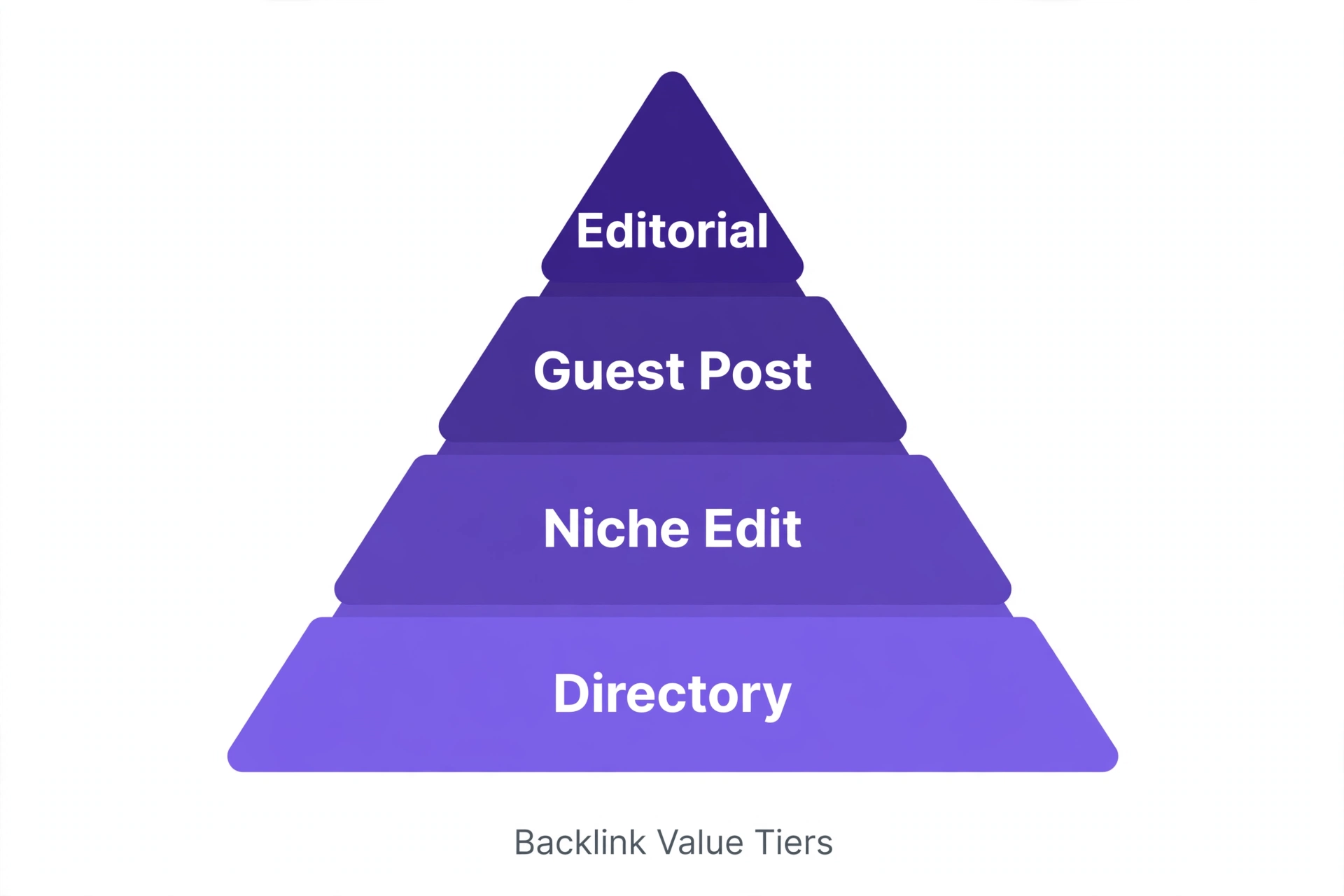
Combine the two — editorial and contextual — and you have the platonic ideal of a backlink: a followed, in-content link from a relevant, authoritative page, given freely. Every other link type is measured against this standard. Fight me.
What editorial links look like in the wild
They look like citations. A news site referencing your data. A blogger linking your tutorial as “the best guide on X.” A university resource page listing your tool. A Wikipedia citation pointing to your published research — that’s editorial in its purest form, surviving the scrutiny of volunteer editors.
Notice the pattern: the linking page would be worse without your link. That’s the test. If removing your link makes the page poorer, it’s genuinely editorial.
Can you “build” editorial links?
Here’s the paradox: the most valuable links are the ones you can’t directly build. But you can absolutely earn them — by creating the things people naturally cite: original data, definitive guides, free tools, striking visuals, genuine opinions.
This is the entire philosophy behind white hat link building: stop chasing links and start deserving them. It’s slower. It’s harder. It’s also the only approach that compounds instead of decaying.
Real talk: the effort-to-reward math
One genuine editorial link from a respected publication can outperform a hundred low-quality placements. But “publish great content and wait” is not a strategy — it’s a lottery ticket. The practitioners who win at this combine link-worthy assets with active promotion: digital PR, outreach, community participation. Earned doesn’t mean passive.
4. Guest Post Links
Guest posting is the Toyota Corolla of link building: not flashy, endlessly debated, and — when you buy the real thing instead of a lemon — remarkably reliable. It’s also the most misunderstood link type on this list, because the phrase “guest post” now covers everything from genuine thought leadership to thinly disguised paid placements on content farms.
Let’s separate the car from the wreck.
What is a guest post link?
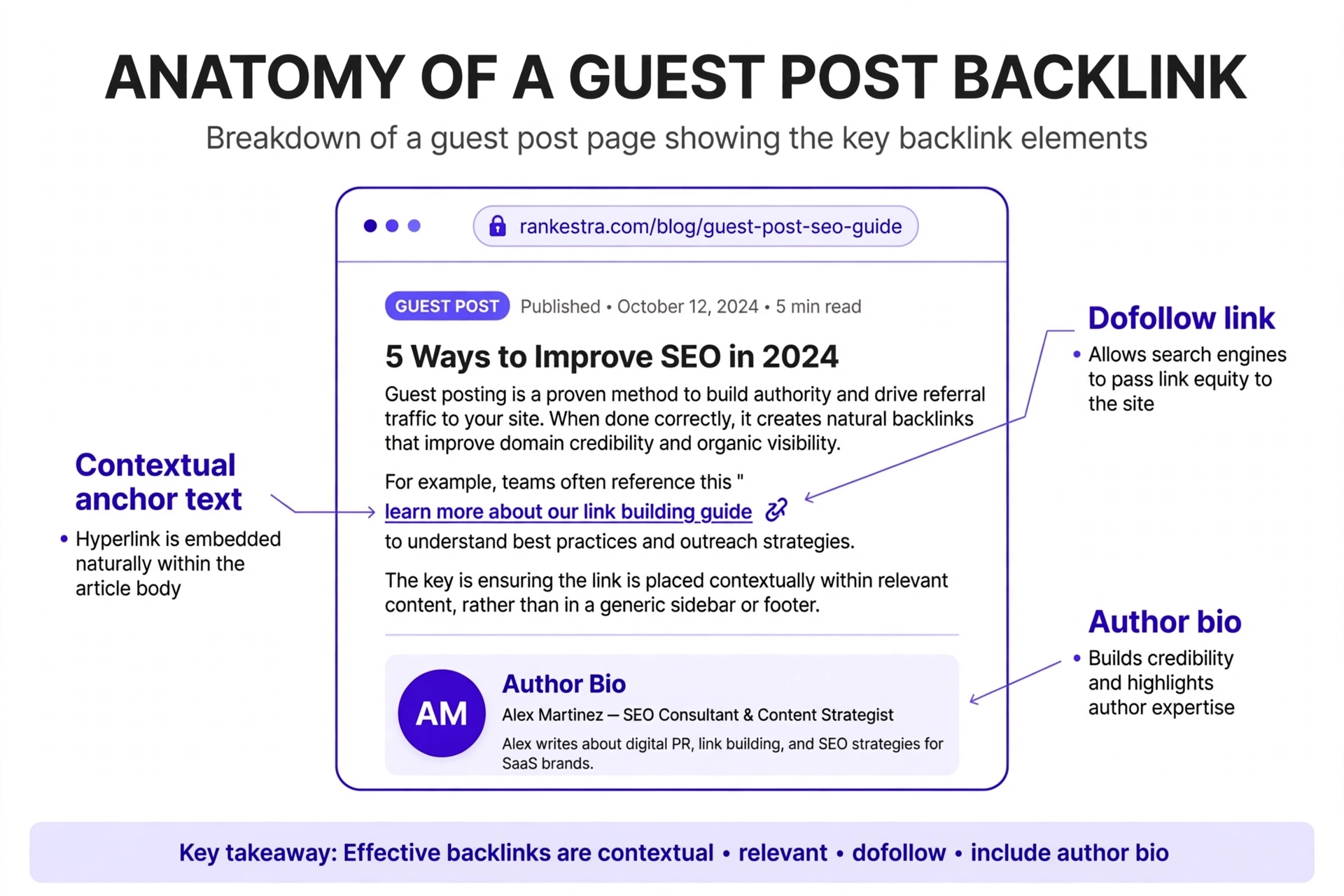
A guest post link is a backlink you earn (or arrange) by writing an article for someone else’s website. You provide the content; they provide the audience and the link — usually a followed, contextual link inside the article body, pointing to a relevant page on your site.
Why guest posts still work in 2026
Because the underlying mechanism is legitimate. A real article, on a real site, with real traffic, linking contextually to a relevant resource — that’s barely distinguishable from an editorial link. Google’s issue was never with guest posting itself; it was with the industrial-scale version: keyword-stuffed 500-word posts on sites that exist solely to sell links.
The dividing line is the publisher. Real publication with editorial standards and actual readers? Valuable. A “write for us” farm with 400 categories and zero traffic? That’s not a guest post — it’s a paid link wearing a costume.
The anatomy of a good guest post link
Four things, all non-negotiable. One: the site has genuine organic traffic — check it, don’t trust the seller’s screenshot. Two: the article is genuinely useful, not filler wrapped around your link. Three: your link sits naturally inside the content, with relevant anchor text. Four: the link is followed and the page gets indexed.
Miss any one of these and you’re overpaying. Miss two and you’re buying a future disavow file entry.
Where guest posts go wrong
The failure modes are depressingly consistent: posts on irrelevant sites, spun or AI-slop content, over-optimized exact-match anchors repeated across dozens of posts, and networks of sites owned by the same seller — private blog networks with a fresh coat of paint.
Real talk: if a seller offers you “DA 50+ guest posts” for $15, you’re not buying a guest post. You’re buying a PBN link. Our guide to buying backlinks safely breaks down exactly how to vet sellers before you spend a dollar.
How guest posting fits your strategy
Guest posts are a workhorse link type: scalable, controllable, and effective when the publishers are real. For a deeper playbook see our guest posting and blogger outreach guide. And if you’d rather have it done for you, our guest post service only places on traffic-verified publications.
5. Niche Edits & Link Insertions
What if you could skip the content creation, skip the “will they publish it” roulette, and place your link inside an article that’s already ranking, already indexed, and already trusted? That’s the promise of the niche edit — and it’s why this link type quietly became the favorite of experienced link builders.
What is a niche edit?
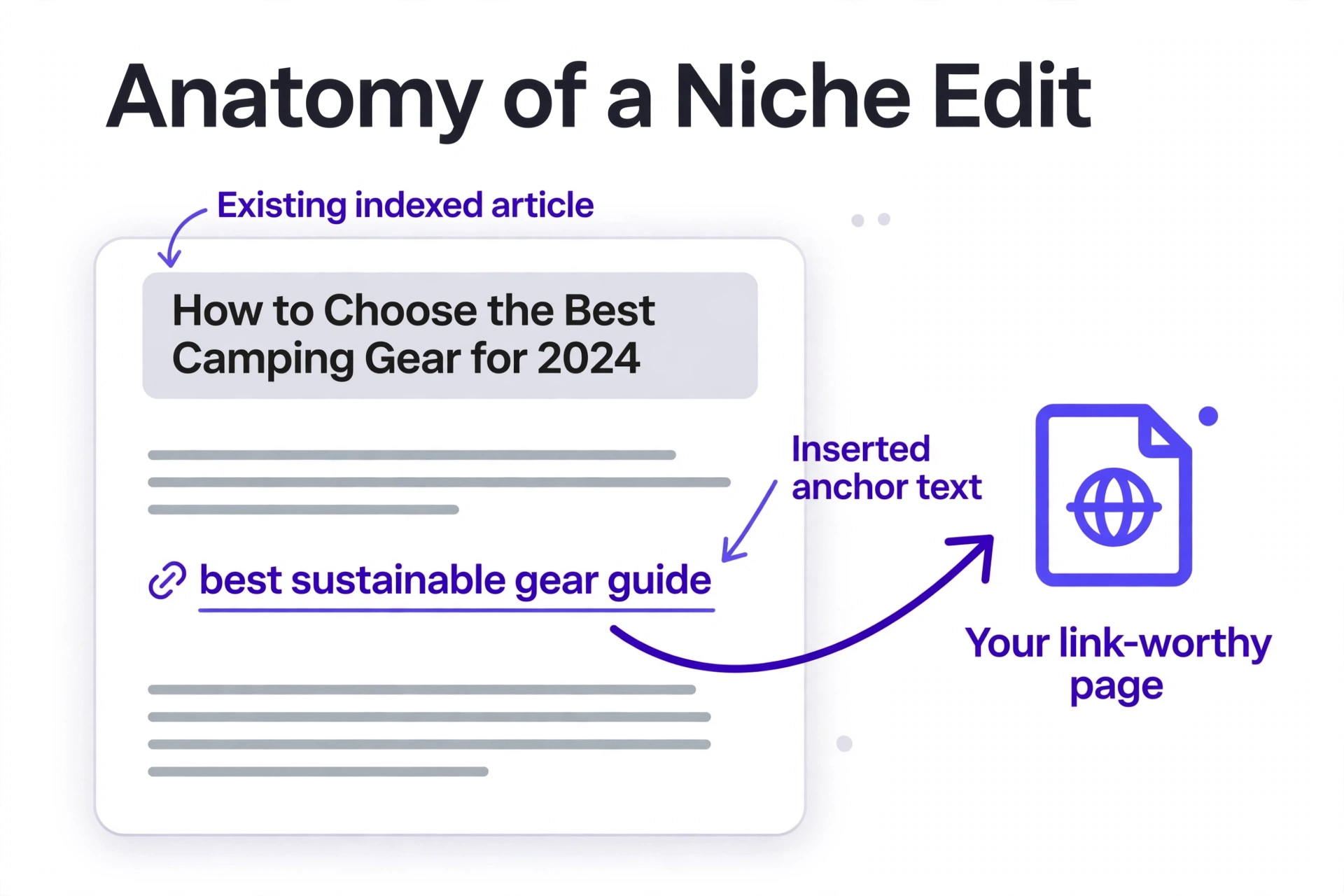
A niche edit (also called a link insertion) is a backlink added to an existing article on someone else’s site. Instead of writing a new post, you convince a site owner to insert your link — with a sentence or two of context — into a relevant paragraph of a page that’s already live.
Why insertions can outperform new guest posts
Think about what a new guest post has to do: get published, get discovered, get crawled, earn its own authority over months. A niche edit skips all of that. The host page is already indexed. It’s already trusted. Your link starts passing value almost immediately. You’re borrowing existing authority instead of building new authority from zero.
The risks nobody mentions
Real talk: niche edits have a supply problem. There are only so many relevant, high-quality articles willing to accept insertions. An insertion on a page with no traffic, no relevance, and no editorial standards is just an expensive directory link. Vet the host page like you’d vet a guest post publisher: real traffic, real relevance, real site.
Niche edits vs guest posts: which wins?
Honest answer: it depends what you’re optimizing for. Speed and authority transfer? Niche edits. Control over content and anchor context? Guest posts. Scale? Guest posts. Most serious campaigns use both. For the full comparison read our niche edits and link insertions guide. Prefer done-for-you? Our link insertion service handles outreach and placement on vetted pages.
6. Digital PR Links
What do you get when you combine a newsworthy story, a journalist on deadline, and a link back to your site? The single most authoritative link type a business can earn — and the one with the most dramatic gap between “doing it” and “doing it well.”
What is a digital PR link?
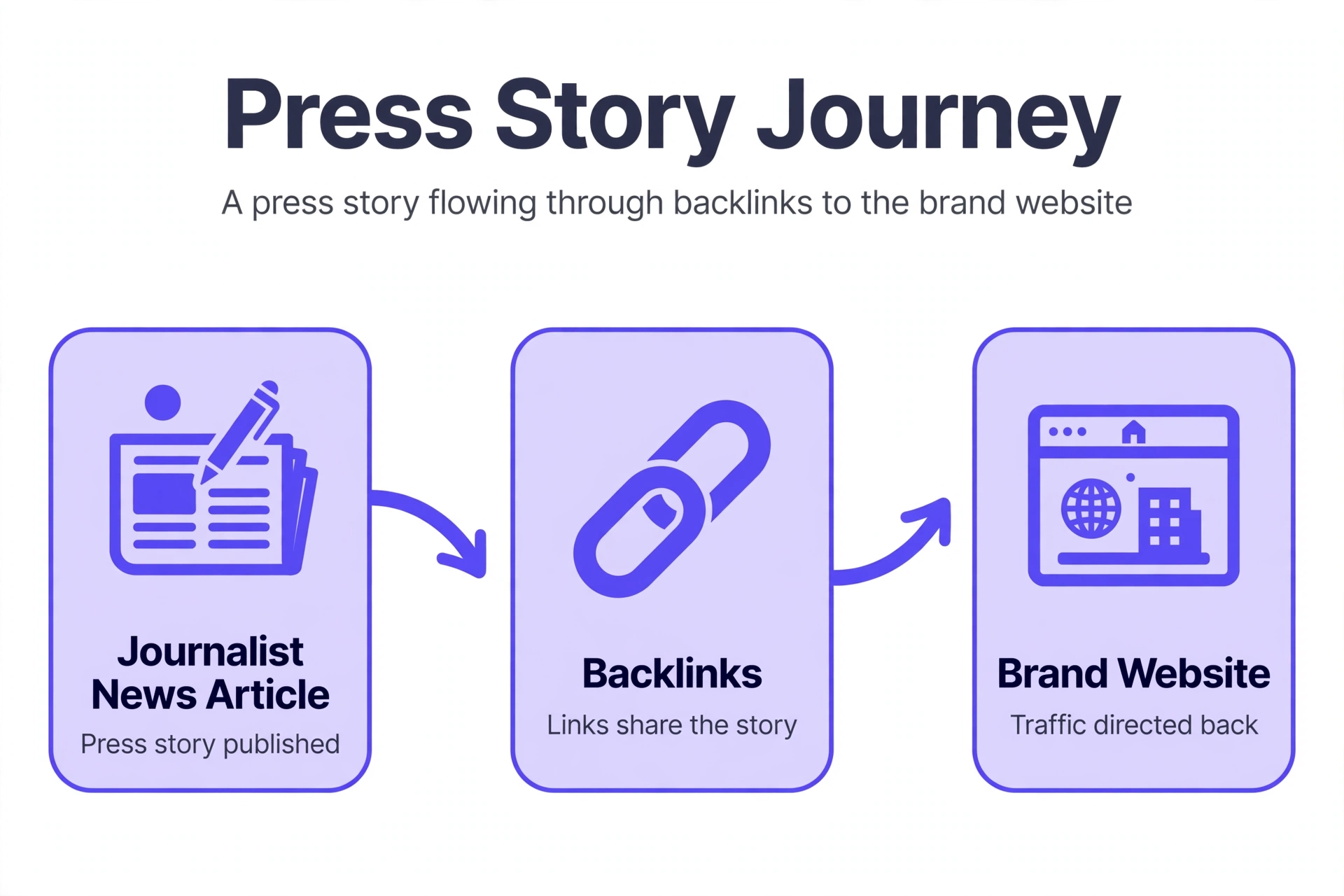
A digital PR link is a backlink earned through media coverage — a journalist, blogger, or publication links to your site while covering your story, data, or commentary. The classic vehicles: original research and surveys, data studies, expert commentary, creative campaigns, and free tools.
The defining trait: the link is a byproduct of being newsworthy, not the purpose of the content. Nobody at the publication is thinking about your SEO. They’re thinking about their readers. That’s precisely why the link is so powerful.
Why journalists’ links hit different
News publications and major media sites sit at the top of the web’s trust hierarchy. They have enormous authority, ruthless editorial standards, and — critically — they almost never sell links. A link from a real newsroom is the closest thing to a certified vote of confidence that exists. Want the full playbook? Read our digital PR link building guide.
One quirk to know: big publications sometimes nofollow external links by policy. A nofollow link from a major newspaper still delivers massive referral traffic and brand authority — remember chapter 2. Don’t turn your nose up at it.
What it actually takes
Real talk: digital PR is not “send 100 emails with a press release.” It’s a creative discipline. You need something genuinely worth covering — and “we launched a feature” is not that thing. The campaigns that earn links have tension: surprising data, a contrarian finding, a story with stakes.
It also takes time and tolerance for rejection. Journalists ignore most pitches. The ones who succeed treat PR as a pipeline — multiple story angles, multiple assets, persistent follow-up — not a single Hail Mary email.
Is digital PR right for you?
Honest opinion: not for everyone, and that’s fine. If you’re an early-stage site with no brand story and no data, your energy is better spent on guest posts and niche edits first. Digital PR shines once you have something to say and the assets to say it with. When you’re ready, our digital PR link building guide walks through the full playbook.
7. Directory, Citation & Profile Links
Raise your hand if you’ve ever paid someone on a freelance marketplace for “500 directory submissions.” Now keep it raised if a single one of those links ever moved a ranking. That’s what I thought. Let’s talk about why — and about the narrow cases where directories actually still matter.
What are directory links?
Directory links come from listing your site in web directories — categorized lists of websites, from general to niche-specific. In 2005, this was legitimate SEO. In 2026, the vast majority of general web directories are link graveyards — thousands of outbound links, zero editorial standards, zero traffic.
Citations: the local SEO exception
Local citations — mentions of your business name, address, and phone number on directories like Google Business Profile and Yelp — are a different animal. For local SEO, citation consistency across trusted directories is a genuine ranking factor. The distinction: citations serve verification, not authority.
Profile links: mostly noise
Profile links come from user profiles on forums, social platforms, and Web 2.0 sites — a link in your bio on some platform nobody visits. They’re trivially easy to create, which is exactly why they’re nearly worthless for rankings. Worse, bulk profile-link packages are a classic footprint — hundreds of identical bio links appearing overnight is not a strategy, it’s evidence.
When directories make sense
Three cases. One: local SEO citations on real, trafficked directories. Two: genuinely curated niche directories that humans actually browse. Three: industry associations and chambers of commerce — membership links from real organizations. The test: would you want this listing even if search engines didn’t exist? If yes, it’s worth having.
Real talk: the 2009 playbook is dead
Mass directory submission, article directory blasts, social bookmarking floods — these tactics didn’t just stop working, they became liabilities. Google’s spam policies explicitly target manipulative link schemes. Anyone selling you “500 directory links” in 2026 is selling you a time machine to a penalty.
8. Forum & Comment Links: The Honest Truth
Deep breath. This is the chapter where I tell you that the link type beginners obsess over most — because it’s free and easy — is the one that matters least. And then I’ll tell you why forums are still worth your time anyway. Both things are true.
The honest truth about comment links
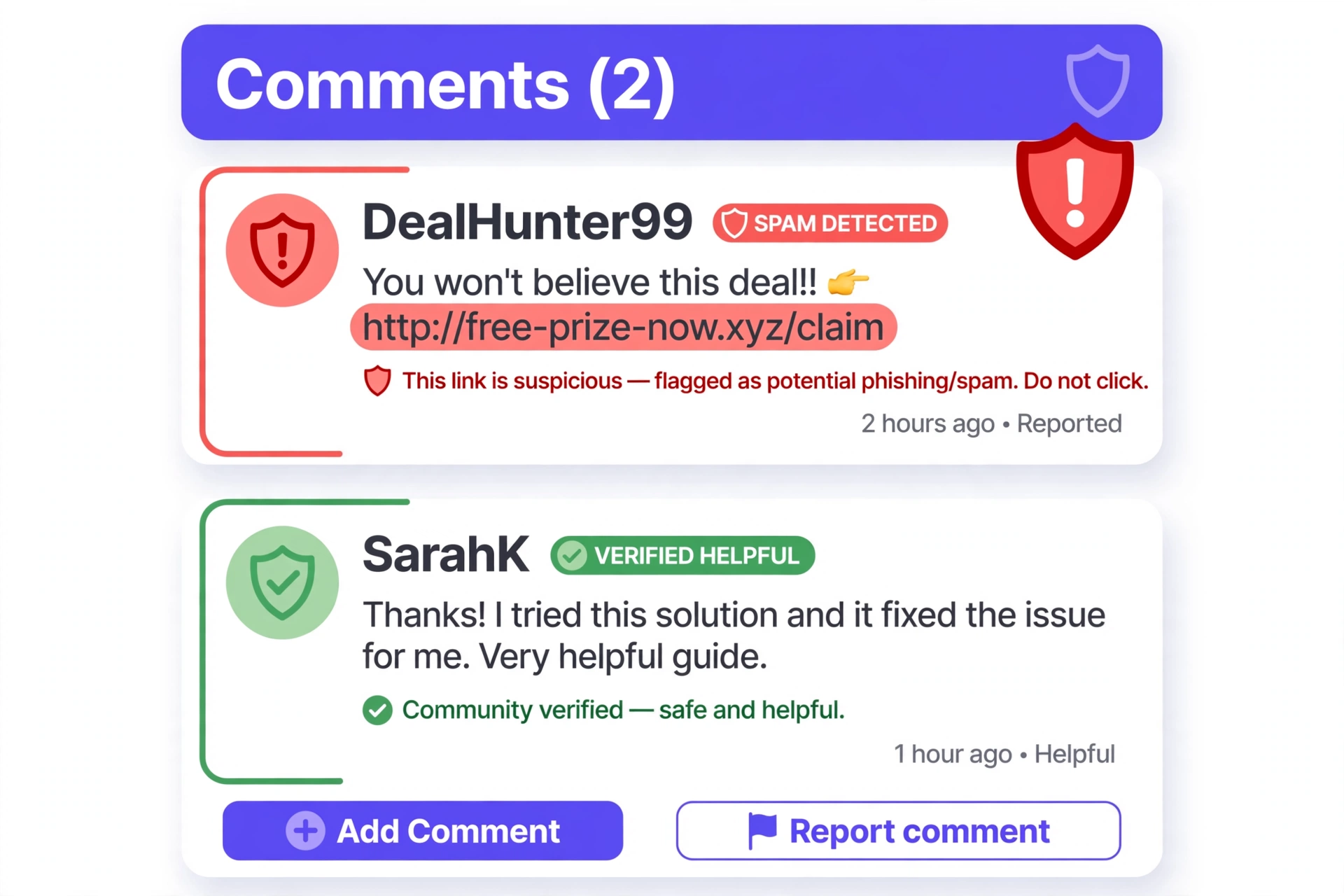
Blog comment links — the “Great post! Check out my site” genre — are among the lowest-value links in existence. They’re almost always nofollow or UGC-labeled, they sit in sections search engines explicitly distrust, and they’re surrounded by hundreds of identical spam attempts. One thoughtful comment link won’t hurt you. A thousand automated ones absolutely will.
The math is brutal: the easier a link is to get, the less it’s worth. Comment links are the easiest links on the internet. Draw your own conclusion.
Why forums still matter (for traffic, not links)
Forums and communities — Reddit, Quora, niche Discords, Stack Exchange — can be tremendous for your business. Just not for the reason beginners think. A genuinely helpful answer that ranks on Google or gets upvoted can send targeted traffic for years. The link itself? Usually nofollow, often stripped entirely. Doesn’t matter — traffic that converts beats followed links that don’t.
The UGC attribute connection
Remember chapter 2’s UGC attribute? This is where it lives. rel="ugc" was designed precisely for links inside comments and forum posts. In Shopify’s 1.4 billion-link profile, only about 515,000 links carry the UGC label. Search engines treat the whole section (comments, forums) with caution regardless of labeling.
When comment links hurt you
A few genuine comments: harmless. Automated comment spam at scale: a direct violation of Google’s spam policies. The danger isn’t one link — it’s the pattern. Hundreds of keyword-rich comment links appearing in days is one of the most detectable footprints in SEO. If you’re tempted by a “$5 for 1,000 forum backlinks” offer, read our buying backlinks safely guide first.
Real talk: the participation playbook
Use forums like a human, not a link builder. Answer questions thoroughly. Become a recognized name. Link to your content only when it’s genuinely the best answer — and expect most of those links to be nofollow. The payoff is reputation, referral traffic, and occasionally a community member with a real site who links to you editorially. That’s how forum participation actually builds links: indirectly, through humans who respect your expertise.
9. Footer, Sidebar & Sitewide Links (The Shopify Case)
What happens when one link appears on 1.7 million websites simultaneously? You get the strangest, most instructive backlink pattern on the internet — and Semrush’s data on Shopify hands it to us on a silver platter. This chapter is a masterclass in what not to chase, taught by 254 million real links.
What are sitewide links?
A sitewide link appears on every page of a website — typically in the footer (“Designed by X”), the sidebar, or a blogroll. One relationship, thousands of individual backlinks. It sounds efficient. Search engines think it looks efficient in exactly the way that worries them.
The Shopify case: 254.7 million footer links
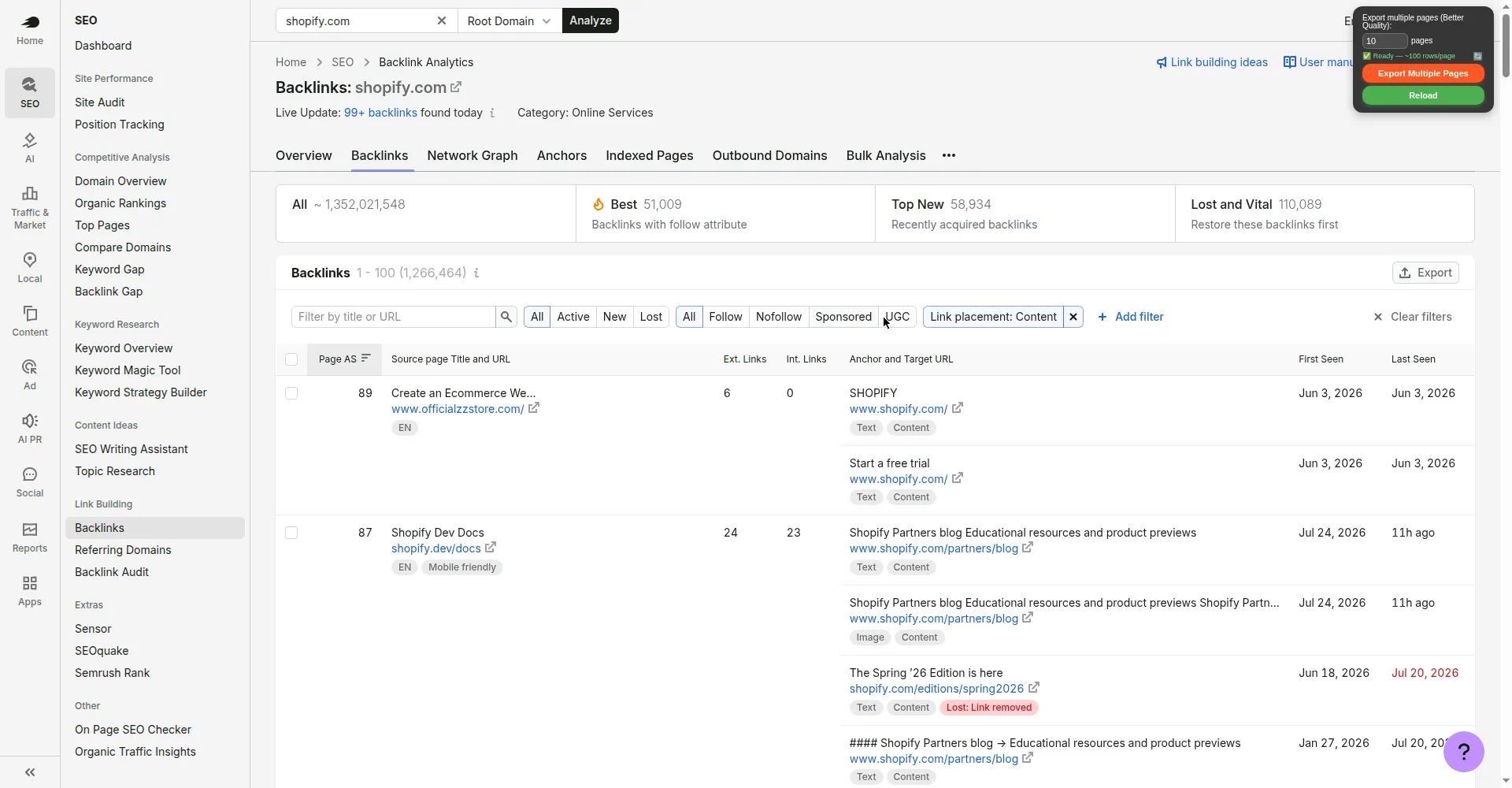
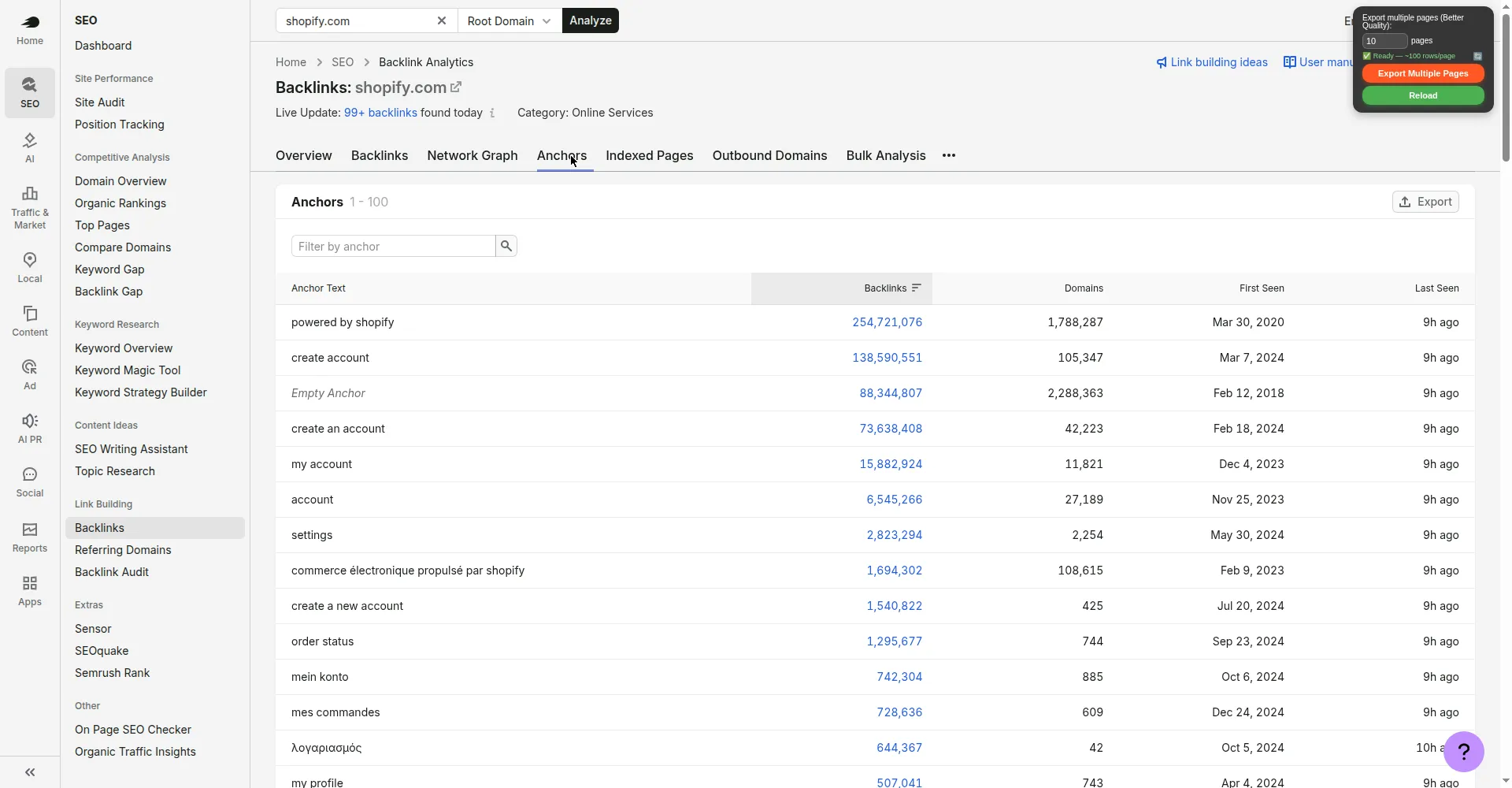
Here are the real numbers from Semrush’s Backlink Analytics for shopify.com. The single most common anchor pointing at Shopify is “powered by shopify” — appearing in 254,721,076 backlinks across 1,788,287 referring domains. A quarter of a billion links, one anchor, all from merchant footers.
These are textbook sitewide links: every Shopify store carries a “Powered by Shopify” credit in its footer, each one linking back to shopify.com. And the most visible ones are nofollow. Does Shopify rank anyway? Obviously — despite the footer links being discounted, not because of them.
Why Google discounts sitewide patterns
Think about it from the search engine’s perspective. If every page of a 10,000-page site links to the same designer with the same anchor, that’s not 10,000 endorsements — it’s one business relationship repeated 10,000 times. Counting each instance as a separate vote would be absurd, and Google’s engineers know it.
The practical effect: sitewide links get collapsed. Whether Google counts them as one link, heavily discounts them, or ignores the duplicates varies by case — but the days of footer-link sculpting moving rankings ended over a decade ago. Buying “10,000 footer backlinks” in 2026 is buying 10,000 instances of being ignored.
The empty-anchor mystery: 88.3 million links, 2.29 million domains
Here’s the weirdest row in Shopify’s anchor table: empty anchor text — 88,344,807 backlinks across 2,288,363 domains, the highest domain count of any anchor. What links with no text at all?
Image links. Logo links. Icon links. When a site’s logo in the header links home — or a “Powered by” badge is an image rather than text — the anchor is empty (or rather, the alt text serves as the anchor). Nearly 2.3 million domains link to Shopify this way. It’s a reminder that a huge share of the web’s links are navigational and decorative, not editorial — and search engines are well aware of the difference.
Sidebar links: the same story
Sidebar links — blogrolls, “recommended tools” widgets, partner badges — live in the same discounted neighborhood as footers. They’re boilerplate, not editorial. A sidebar link from a relevant, trafficked blog isn’t harmful, but expecting it to move rankings is expecting too much.
The exception that proves the rule: a sidebar link that drives real referral traffic is still valuable as marketing. Judge it by the humans it sends, not the algorithms it impresses.
Real talk: should you want sitewide links?
As a strategy? No. Never pursue sitewide links deliberately — the value-per-link is tiny, the footprint is obvious, and sellers offering “homepage sidebar links on 500 sites” are selling you the 2010 playbook. As a byproduct? Sure. If you make a WordPress theme, a Shopify app, or a free tool, footer credits will come naturally. Let them. Just don’t confuse them with a link building strategy.
10. Image & File Backlinks + Your Action Plan
We’ve covered nine types. Two remain — and they’re the ones hiding in plain sight, making up nearly a quarter of the largest link profile we’ve examined. Then: the comparison table, the verdict on all ten types, and your marching orders.
Image backlinks: 21% of Shopify’s profile
Back to the Semrush data: of Shopify’s 1.4 billion backlinks, 21% — 299 million — are image links, versus 78% text (1.1 billion). Nearly one in four links to one of the web’s biggest sites contains no anchor text at all — just an image doing the linking.
How do image links earn value? Through alt text, which functions as the anchor, and through the linking page’s context. An infographic that gets embedded across a hundred blogs — each embed linking back to you — is the classic image-link strategy. It works because the image itself is the link-worthy asset.
Real talk: most sites will never build an image-link strategy deliberately, and that’s fine. But if you publish original visuals — charts, infographics, diagrams, photography — make them embeddable with attribution. Every embed is a link you didn’t have to pitch for.
File backlinks: the forgotten type
Here’s a link type almost nobody talks about: links pointing to files — PDFs, images, documents hosted on your domain or CDN. Semrush’s Backlinks tab for Shopify shows live examples: shenyuncollections.com linking to a PDF brochure on cdn.shopify.com, and shopabctv.com linking to a CDN-hosted image file for a legal guarantee document.
Why does this matter? Because files accumulate links quietly — spec sheets, whitepapers, product manuals, original research PDFs. A widely-shared PDF can gather hundreds of links while you sleep. If you publish substantive documents, host them on your own domain (not a third-party viewer) so the links benefit you.
The ultimate comparison: every link type ranked
You’ve read 6,000 words. Here’s the cheat sheet — all ten types scored on SEO value, risk, and effort:
| Link Type | SEO Value | Risk | Effort | Verdict |
|---|---|---|---|---|
| Editorial / contextual | 5/5 | None | High | Pursue relentlessly |
| Digital PR | 5/5 | None | Very high | Pursue when ready |
| Niche edit | 4/5 | Low-Medium | Medium | Core tactic |
| Guest post | 4/5 | Low-Medium | Medium | Core tactic |
| Wikipedia citation | 3/5 | Low | High | Pursue if notable |
| Image / file | 3/5 | None | Medium | Build passively |
| Local citation | 3/5 | None | Low | Essential for local |
| Directory (niche) | 2/5 | Low | Low | Selective only |
| Forum / comment | 1/5 | Medium-High | Low | Traffic only, never scale |
| Footer / sitewide | 1/5 | Low | Low | Accept, never pursue |
| Profile links | 1/5 | Low | Low | Skip |
Notice the pattern: value correlates with difficulty. The links anyone can get are worth the least. The links that require genuine merit are worth the most. There are no shortcuts in this table — only trade-offs.
Your action plan: which types to actually pursue
Enough theory. Here’s what to do Monday morning, in priority order:
1. Make something worth linking to. One definitive guide, one original data study, one free tool — a single link-worthy asset outperforms ten mediocre blog posts. This is the foundation everything else stands on.
2. Build your workhorse links. Guest posts and niche edits on real, traffic-verified sites are the reliable engine of most successful campaigns. Vet publishers ruthlessly: real traffic, real relevance, real editorial standards.
3. Earn your unfair advantages. Digital PR when you have a story. Wikipedia citations if you’re genuinely notable. Image and file links by publishing visual and document assets worth sharing.
4. Handle the basics. Local citations if you’re a local business. A handful of genuinely curated niche directories. A natural mix of nofollow links (remember: 29% of Shopify’s profile is nofollow — mixed is normal).
5. Skip the junk. No bulk directories. No comment spam. No footer-link packages. No profile-link blasts. Every hour spent there is an hour stolen from tactics that work.
Don’t be the 99%
Here’s the uncomfortable closing truth: 99% of people who read guides like this will nod along, bookmark the page, and then go buy the cheapest backlink package they can find — because effort is hard and shortcuts are shiny.
Don’t be the 99%. You now know what 1.4 billion real backlinks look like, which types carry weight, and exactly where beginners waste their money. The information advantage is yours. The only remaining variable is whether you act like it.
Start with the fundamentals in our White Hat Link Building 101 guide — then pick one tactic from the action plan above and execute it this week. One real link beats a hundred bookmarked guides.
Explore the Rankestra Link Building Library
Master every link building discipline with our in-depth pillar guides:
- White Hat Link Building 101 — the fundamentals
- Digital PR for Link Building — earn media links
- Guest Posting & Blogger Outreach — the workhorse tactic
- Wikipedia Backlinks — citations done right
- Niche Edits & Link Insertions — borrow existing authority
- Niche Link Building — SaaS, iGaming & more
- Buying Backlinks Safely — vet sellers, avoid penalties
FAQ: Types of Backlinks
What are the main types of backlinks?
The ten main types are: editorial/contextual links, guest post links, niche edits (link insertions), digital PR links, directory and citation links, profile links, forum and comment links, footer/sidebar sitewide links, image links, and file links. They’re further classified by attribute — follow, nofollow, sponsored, or UGC — and by format: text, image, or file.
Which type of backlink is the most valuable?
The editorial contextual link — a followed, in-content link from a relevant, authoritative page, given freely because your content deserved it. Digital PR links from major publications are a close second. Both are hard to earn, which is precisely why they’re trusted: value correlates with difficulty across every link type.
Are nofollow backlinks worthless?
No. Nofollow links can drive referral traffic, build brand visibility, and contribute to a natural-looking link profile — nearly a third of Shopify’s 1.4 billion backlinks are nofollow. What they usually don’t do is pass ranking credit the way followed links do. Pursue followed links, but never reject a good nofollow link from a genuine source.
What is the difference between a niche edit and a guest post?
A guest post is a brand-new article you write for someone else’s site, with your link inside it. A niche edit (link insertion) places your link into an existing, already-indexed article. Niche edits can pass value faster since the host page already has authority; guest posts offer more control over content and scale more easily. Most serious campaigns use both.
Do footer backlinks hurt your SEO?
Footer and sitewide links don’t typically hurt — they get discounted. Search engines recognize boilerplate placement (like the 254.7 million “powered by shopify” footer links) and collapse the value rather than counting each instance. They’re fine as a natural byproduct, but never pursue them as a strategy.
How many types of backlinks should I focus on?
Three to four. Build your foundation with guest posts and niche edits on vetted sites, earn editorial and digital PR links as you grow, and let image/file links accumulate passively from good assets. Ignore the rest — spreading effort across ten link types is how beginners end up with a hundred worthless links instead of ten valuable ones.