Guest Posting & Blogger Outreach: The Complete 2026 Guide
Let me tell you about the most misunderstood strategy in link building.
Half the SEO world says guest posting is dead. The other half is quietly publishing guest posts every week and outranking everyone.
Both can’t be right. So who’s lying?
Neither — they’re just talking about two different things. Spammy guest posting (500-word filler on link farms) died years ago, and good riddance. Real guest posting — genuinely useful articles on real publications with real audiences — never died. It just stopped being easy.
In this guide, I’m breaking down everything: the famous Buffer story (how ~150 guest posts helped build a 114,000-referring-domain empire — with real Semrush data), how to find sites that accept posts, the anatomy of pitches that get “yes,” how to write posts editors love, and the mistakes that get most people ignored or penalized.
This is the no-fluff, 2026-current playbook. Buckle up.
Chapter 1: What Guest Posting Actually Is (in 2026)
The 30-second definition
Guest posting = writing an article for someone else’s website, in exchange for exposure and (usually) a backlink to your site.
You bring the content. They bring the audience. Everybody wins — when it’s done right.
What it is NOT anymore
Guest posting is NOT: paying $20 for a post on a “DA 50” site nobody’s heard of; spinning one article across 30 blogs; keyword-stuffed author bios; a shortcut. Google’s spam policies explicitly call out large-scale article campaigns with keyword-rich anchor text as link schemes.
Guest posting vs. blogger outreach
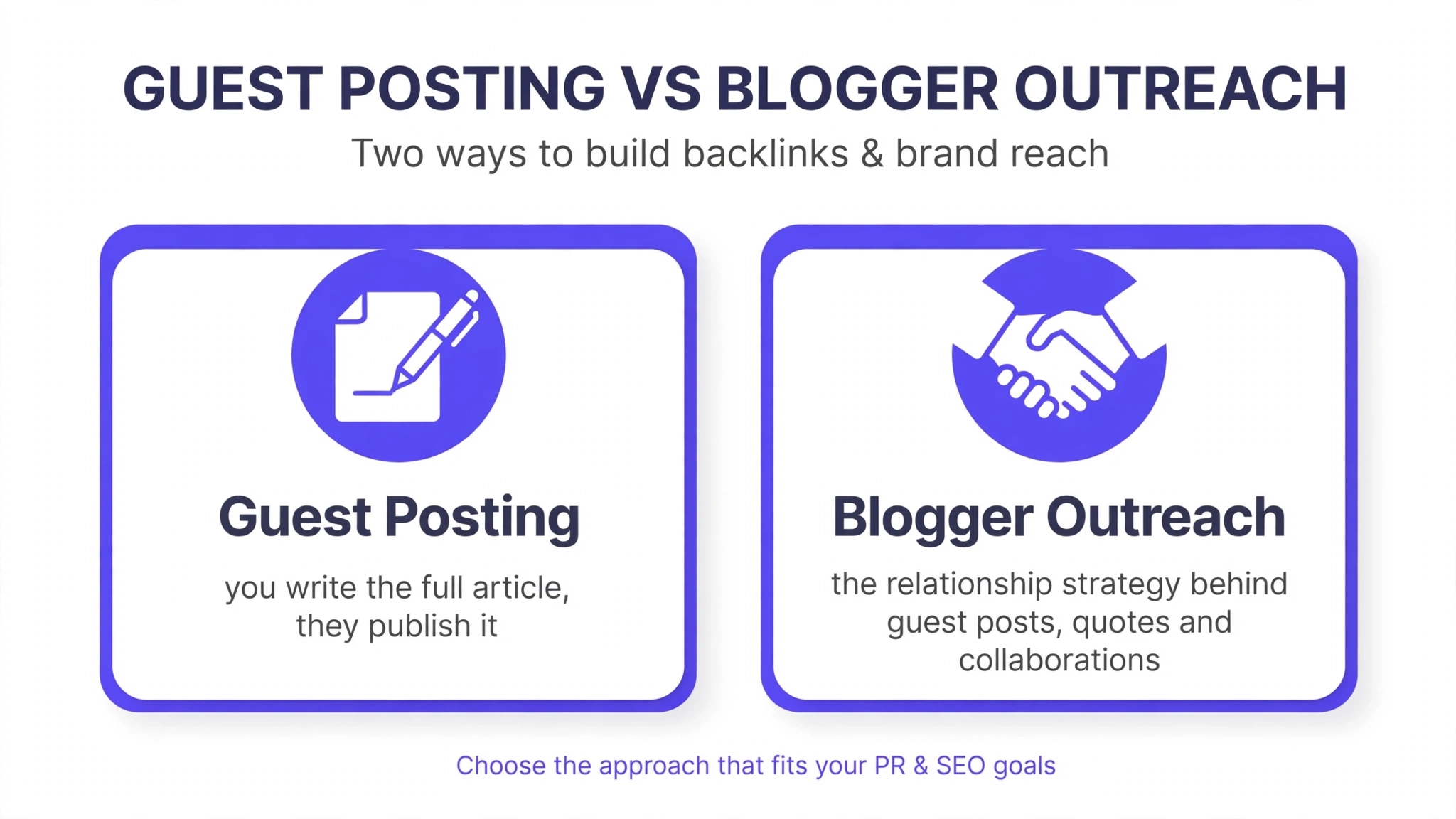
Guest posting = you write the full article; the site publishes it. Blogger outreach = the broader relationship game — guest posts, expert quotes, collaborations, link insertions.
Why it still works
Google can’t kill real guest posting without killing the entire web. Publications need contributors. As long as editors accept outside articles, guest posting remains one of the few strategies where you control the content, the context, and the anchor. Real talk: the people declaring it dead are usually the ones who were doing it badly.
Chapter 2: The Buffer Story — 150 Guest Posts to 114,000 Referring Domains
The legend (documented, not myth)
Buffer’s co-founder Leo Widrich wrote publicly about their growth strategy: roughly 150 guest posts took their blog from zero to 100,000 monthly readers. No ads. Just useful content on other people’s publications, week after week.
The headline numbers (Semrush, 2026)
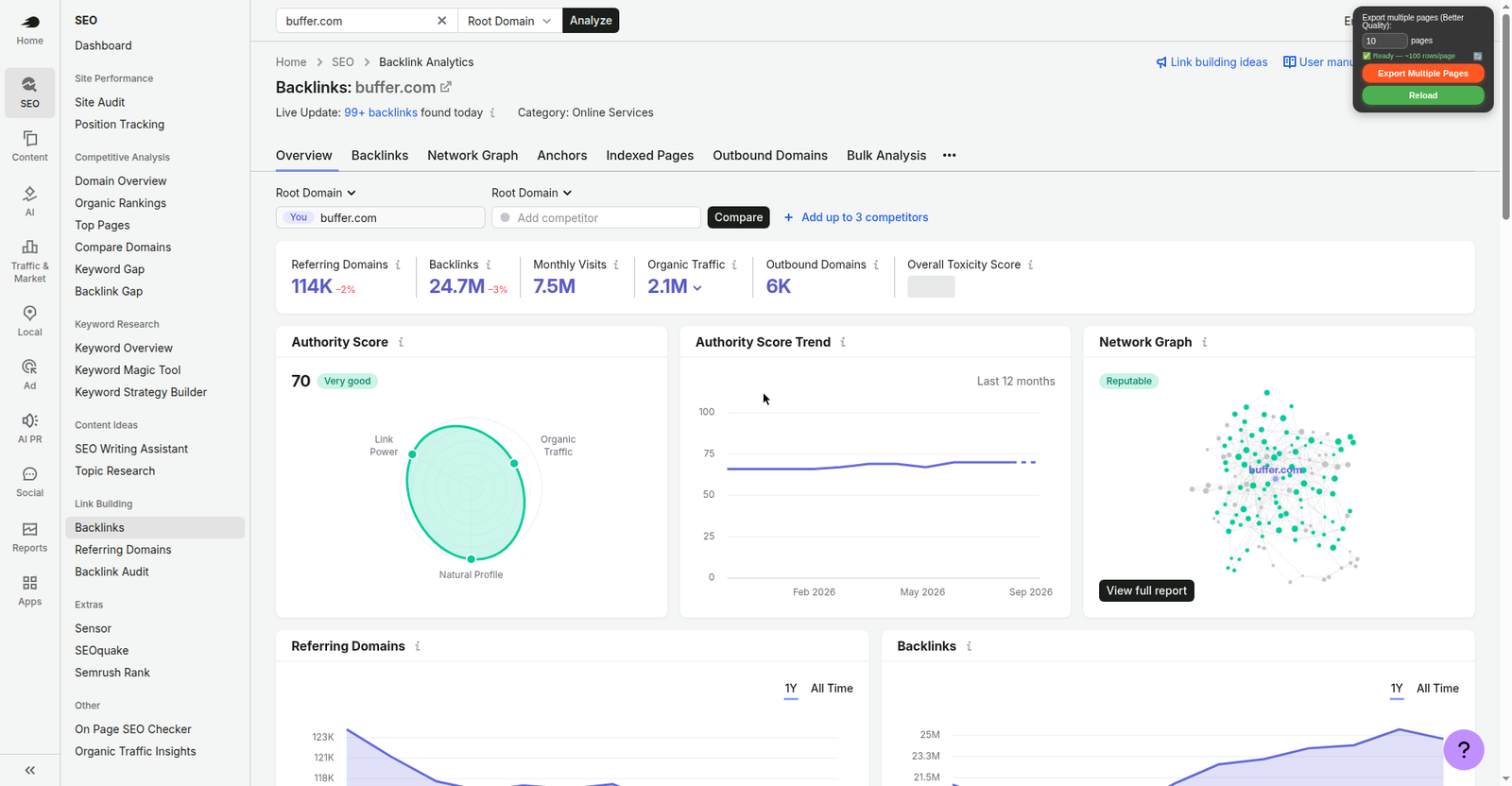
- Authority Score: 70 — “Very good,” stable trend.
- Referring domains: 114,000
- Backlinks: 24.7 million
- Organic search traffic: 2.1 million
- Monthly visits: 7.5 million
The guest-posting fingerprints
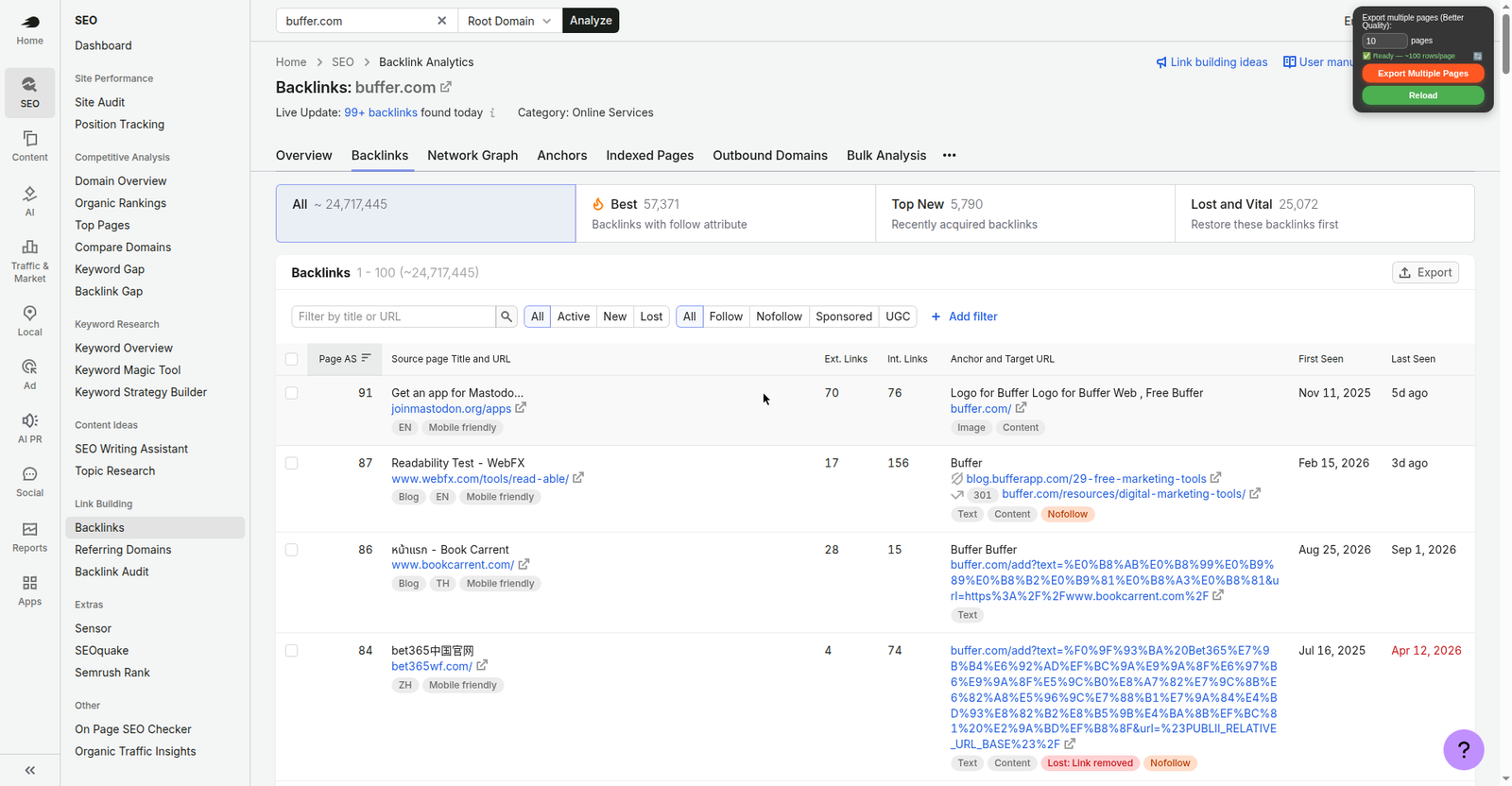
Buffer’s early guest-posting engine left fingerprints still visible today: The Next Web links (a flagship guest post target) still point to Buffer’s resources; the anchor “kevan lee, the next web” appears in their profile (Kevan Lee ran Buffer’s content engine); blog.bufferapp.com assets (“29 free marketing tools”) still earn links years later; Wikipedia cites Buffer’s Instagram Reels guide.
The anchor proof of natural growth
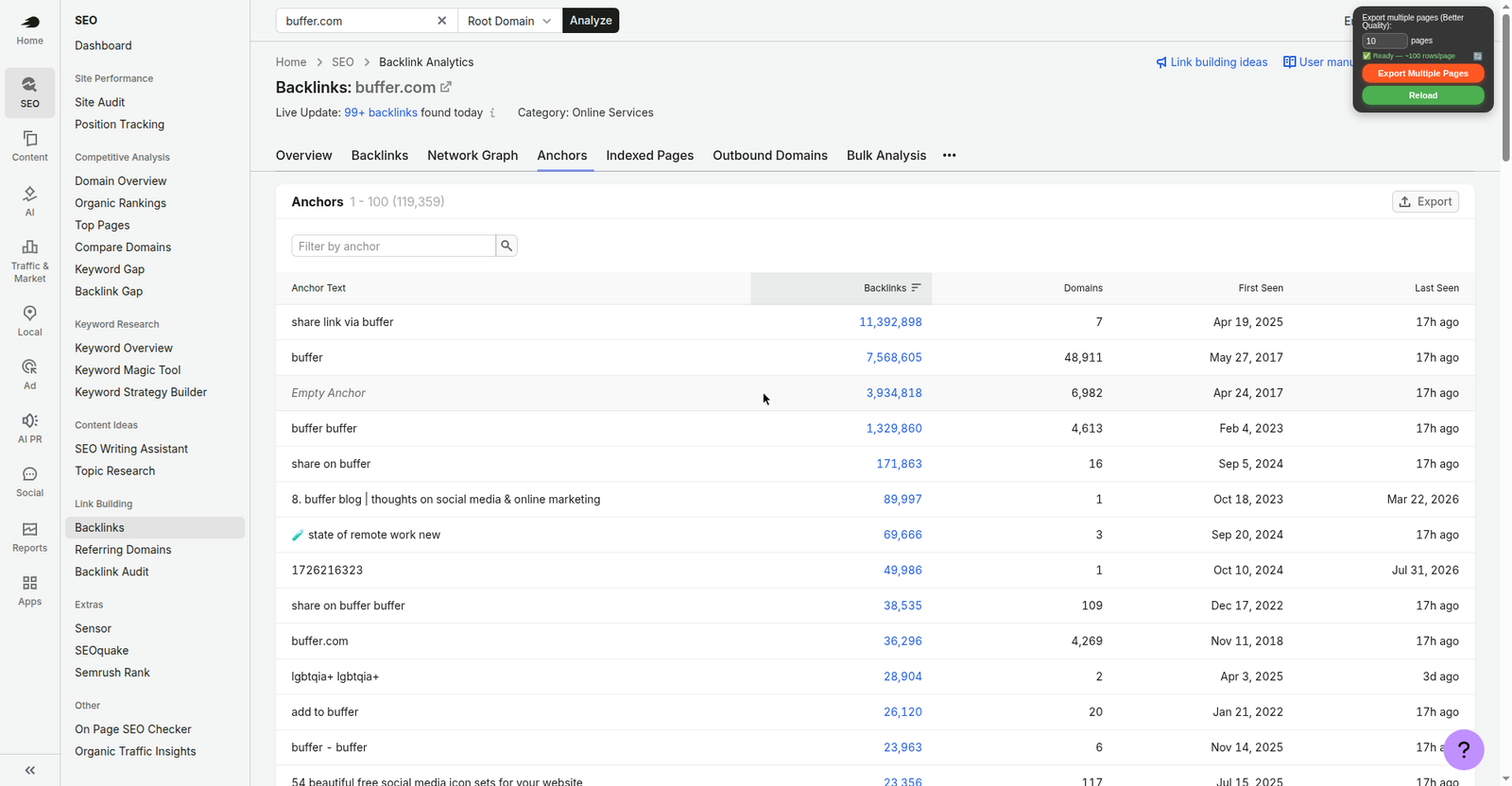
“buffer” — 7.5 million backlinks from 48,911 domains. 119,359 distinct anchors total. Nobody manufactured that diversity — it’s what a decade of real mentions looks like.
The dual engine
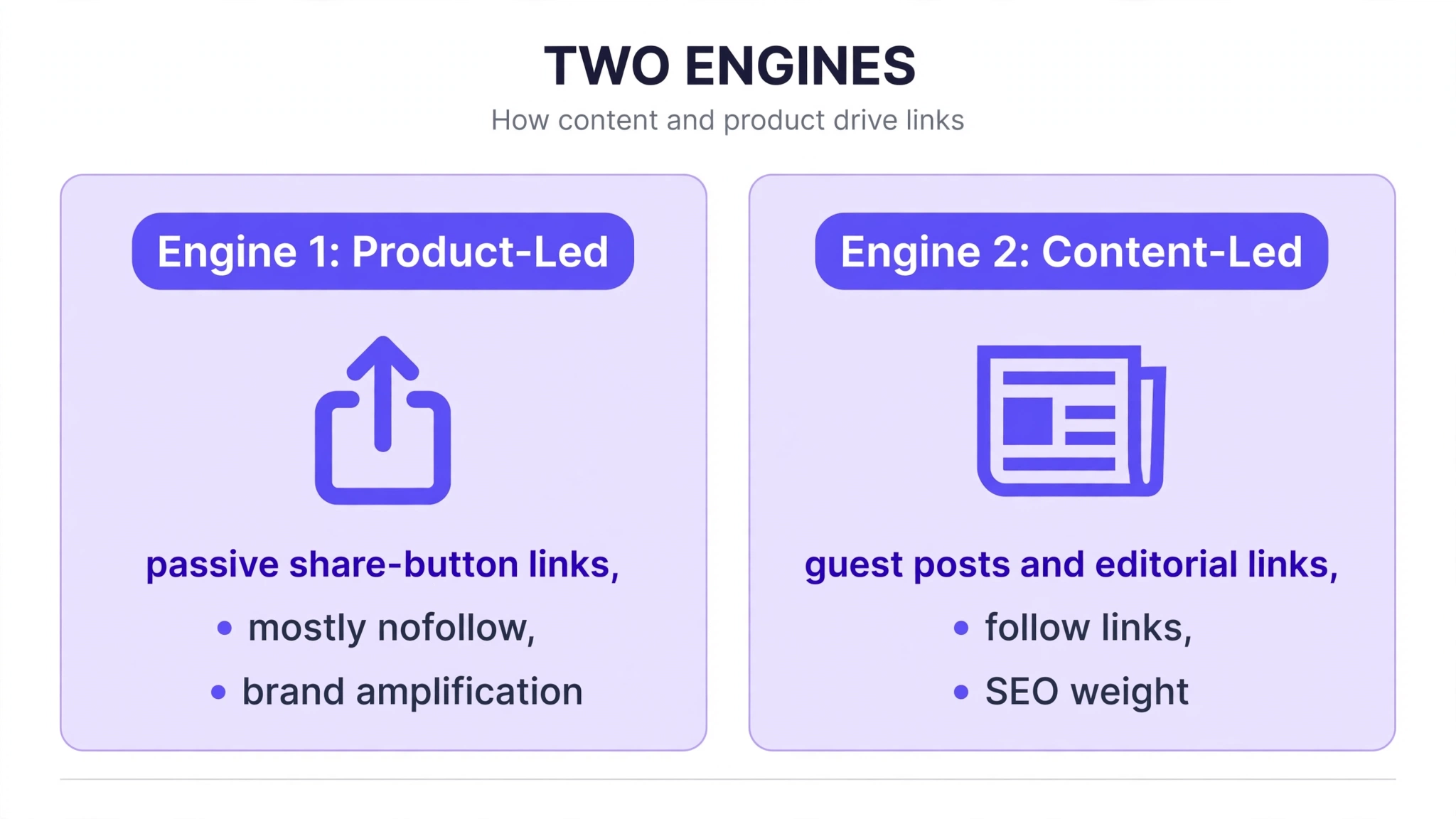
Buffer’s links come from two engines: Engine 1 — product-led (passive): share buttons generate millions of nofollow links (84% nofollow — brand amplification). Engine 2 — content-led (earned): guest posts and editorial links generated the 4.1 million follow links that move rankings. You probably don’t have a viral share-button product — but Engine 2 is available to everyone.
The honest footnote
Buffer didn’t get 114K domains from guest posts alone. Guest posting was the ignition — it built the audience that built the brand that earned everything after. Real talk: nobody’s asking you to write 150 guest posts. But the mechanics — useful content, real publications, consistency — work exactly the same today.
Chapter 3: Why Guest Posting Still Works — The Honest Math
Control is the superpower
Guest posting is the only white-hat strategy where you control the content, the context paragraph, the anchor text, and the target page — on someone else’s authoritative domain. Editorial credibility with tactical control.
The triple win
Every good guest post pays three ways: the link (authority), the audience (referral traffic), the relationship (an editor who’ll accept you again — your second pitch converts 10x better).
It compounds
Buffer’s decade-old guest posts still drive links today — the publications rank, articles get discovered, secondary sites cite them. A guest post is a permanent asset on someone else’s domain.
Guest posting vs. other tactics — the honest comparison
Guest posting: Medium-High quality, $0–$600 per link, Medium speed, High control — the workhorse. Digital PR: Highest quality, $500–$10,000 per campaign, Slow — the authority spike. Niche edits: Medium quality, $100–$1,000, Fast — quick wins. HARO: High quality, $0–$500/month, Medium — free editorial links. The sweet spot: more control than PR, more credibility than paid insertions, cheaper than agencies.
Chapter 4: Finding Sites That Accept Guest Posts
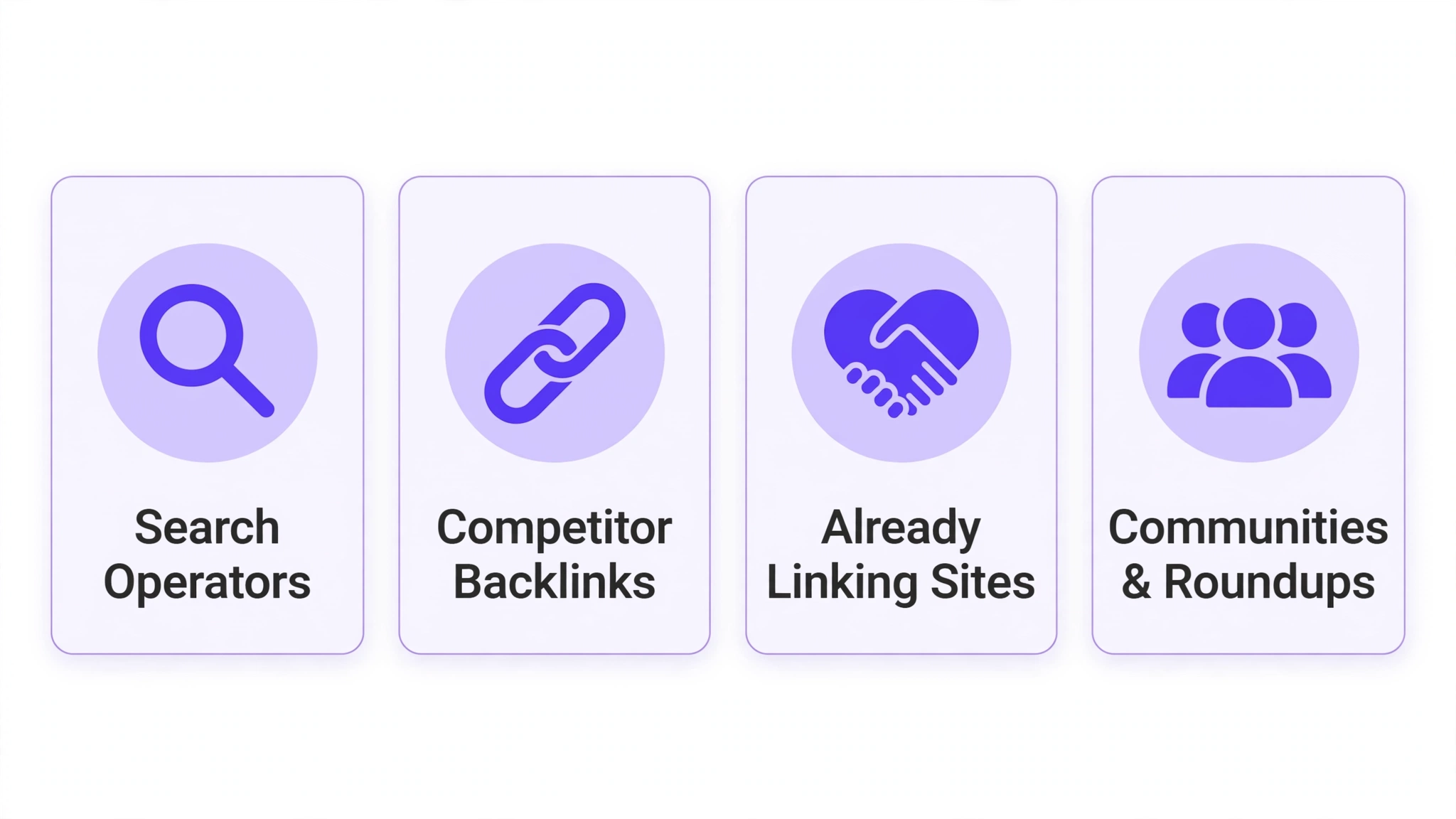
Method 1: Google search operators (free)
[niche] + "write for us" · [niche] + "become a contributor" · [niche] + "guest post guidelines" · [niche] + "submit an article". Real talk: these attract every spammer, so they’re the hardest to get into. Use them, but don’t only use them.
Method 2: Competitor backlink mining (the pro move)
Put a competitor in Semrush Backlink Analytics, filter for blog/publication domains, and look for author-byline patterns — the same author across multiple domains is a guest poster. That’s your prospect list.
Method 3: The “already linking” list
Sites already linking to your niche are warm prospects — you’re a follow-up, not a stranger.
Method 4: Communities and roundups
“Best [niche] blogs” listicles are prospect lists in disguise. Bloggers hang out in niche communities — relationships start before pitches.
Qualifying prospects: the 5-point check
Real traffic? (check Semrush) · Real engagement? (comments, shares, recent posts) · Editorial standards? (read three posts) · Link policy? (natural outbound links?) · Relevance? (topical beats generic authority). The rule: 20 qualified prospects beat 500 scraped domains.
Red flags: spot a link farm in 60 seconds
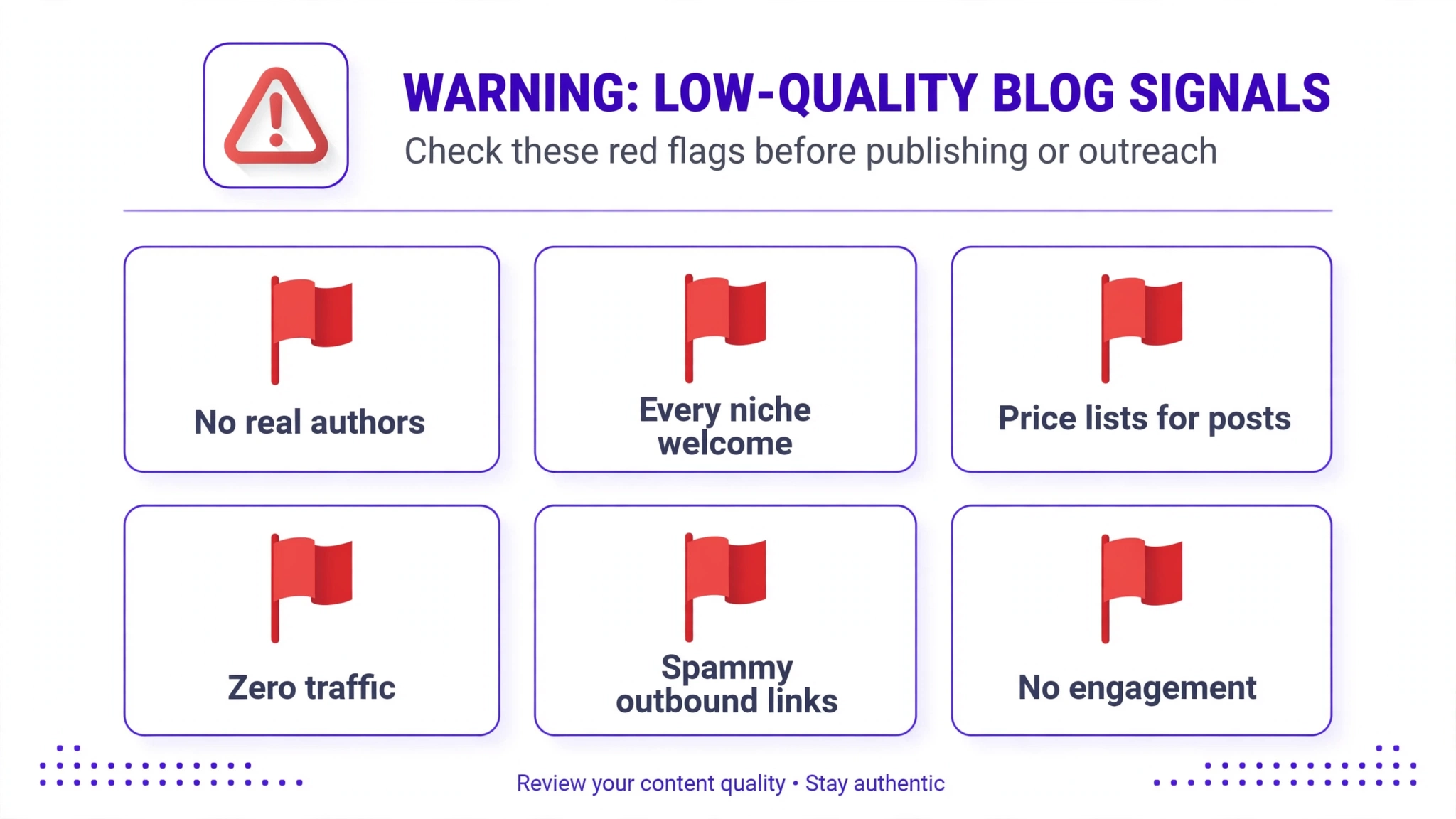
No real author names · every niche welcome · “write for us” + price list · zero organic traffic · outbound links to casinos/pharma · no engagement · PBN footprints. Any two — walk away. Real talk: fifty farm links is a pattern Google’s systems are trained to find.
Chapter 5: The Perfect Pitch — Anatomy of a “Yes”
Why most pitches fail
Editors delete 95% of pitches in under 10 seconds: generic flattery, vague topics, no evidence you read the site, pitching yourself instead of value for their readers.
The anatomy of a pitch that works
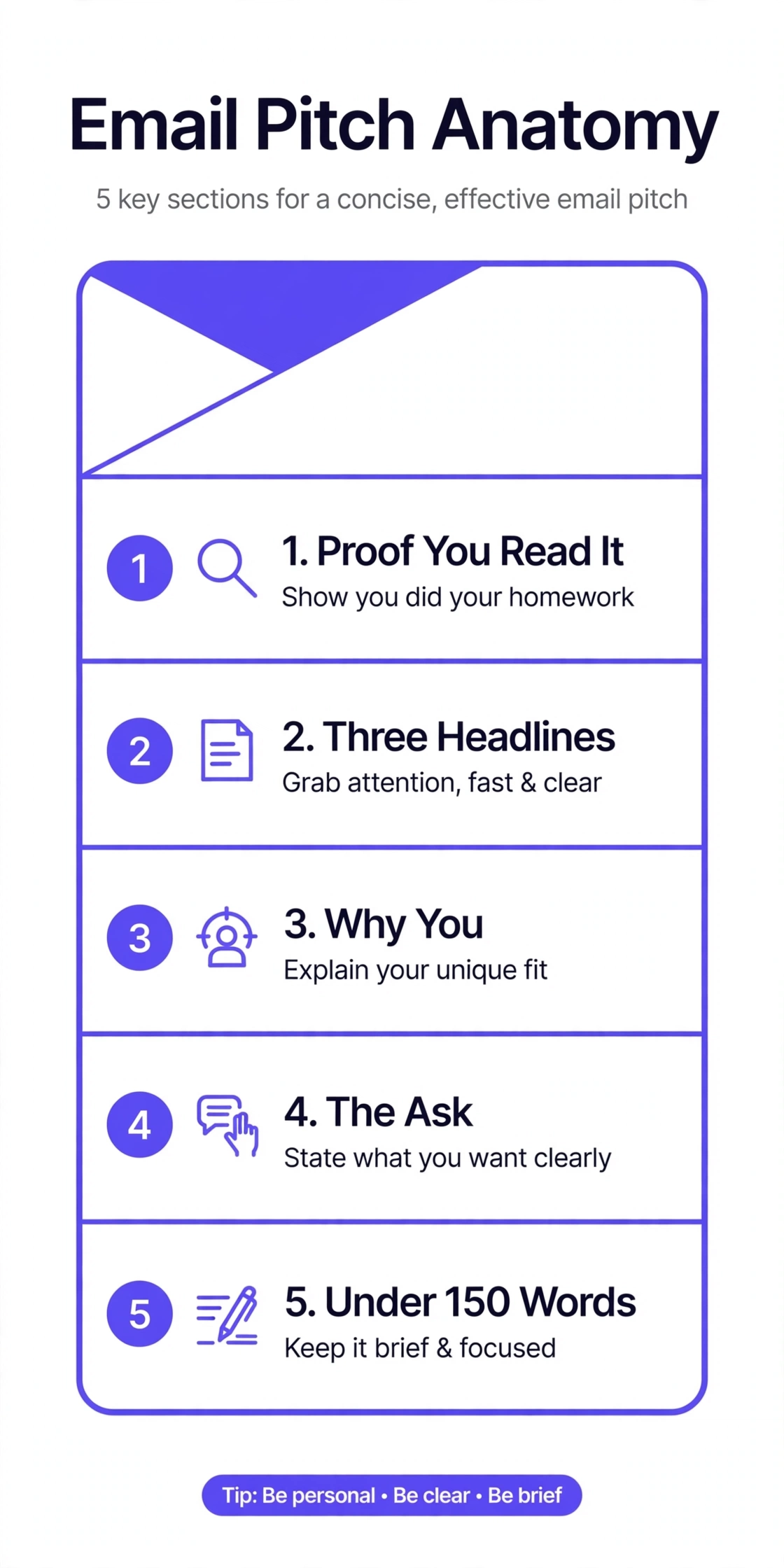
Subject: pitch the topic — “Guest post idea: [specific headline]”. Line 1: proof you read the site (reference a specific article). Lines 2–4: three specific headline options. Lines 5–6: one credibility line. Close: “Would any of these work for [publication]?” Total: under 150 words.
Two templates that work
Template 1: The specific-headline pitch. Subject: 3 ideas for [Publication]. Body: Hi [Name], your piece on [specific article] changed how I think about [topic]. Three ideas: 1. “[Headline 1]” — [angle] 2. “[Headline 2]” — [angle] 3. “[Headline 3]” — [angle]. Background: [one credibility line]. Would any fit? [Your name]
Template 2: The data-led pitch. Subject: Exclusive data: [finding] for [Publication]. Body: Hi [Name], we just [surveyed/analyzed X] and found [surprising stat] — not shared anywhere yet. I’d love to turn it into “[headline]” for [Publication]. Worth a conversation? [Your name]
The follow-up (where deals close)
One polite follow-up 5–7 days later doubles response rates. Two lines, add something new — never “just checking in.” Two follow-ups max.
Follow-up template: Subject: Re: 3 ideas for [Publication]. Hi [Name] — bumping this in case it got buried. Still happy to write any of the three, or tailor something to [timely topic] you’re planning. [Your name]
Negotiating when money comes up
Under $100 on a real site with traffic: often worth it. $100–$500: evaluate like an ad buy. $500+: only top-tier brand plays. Always ask: “Is the fee for editorial review or guaranteed publication?” Real talk: never negotiate like you’re buying a link — you’re commissioning content placement.
What Editors Actually Want (Read This Twice)
The editor’s reality
They need 5–20 articles weekly; most pitches are unusable; a great contributor is rarer than a great employee; their boss measures traffic, not rejections.
What makes them say yes
Less work: complete, formatted drafts publishable in 15 minutes. Their audience’s questions: answer what commenters keep asking. Exclusivity: “not published anywhere else.” Reliability: hit deadlines, respond fast, be easy. Real talk: editors are customers — your pitch is the sales email, your article the product.
Chapter 6: Writing Guest Posts That Get Accepted (and Linked)
Write for their readers, not your link
The editor’s question is never “does this deserve a link?” It’s “will my readers love this?” Write the best article they publish this month; the link takes care of itself.
The acceptance checklist
Match their voice · lead with value (no throat-clearing) · be specific (“7 subject lines that doubled our open rate”) · include original insight (data, screenshots, contrarian takes) · format for skimmers (short paragraphs, subheads, bullets).
The author bio: your link’s home
One sentence who you are, one what you do. Link the most relevant page — deep links beat homepage links. Keep anchors branded/natural: “Jawad Khatri, founder of Rankestra.”
Body links: earn them, don’t sneak them
Link only where a reader genuinely benefits. One natural deep link beats three forced ones. Real talk: if you’re counting how many links you can squeeze in, you’re doing it wrong.
After publication: the 80% most people skip
Share it everywhere · thank the editor publicly · link to it from your own content · repurpose into threads/carousels/video · pitch the follow-up in 4–6 weeks. Real talk: editors talk to each other — your reputation is a prospecting channel.
Chapter 7: Blogger Outreach Strategy — The Relationship Game
Why relationships beat transactions
Warm pitching works ten times better than cold. The best link builders barely cold-pitch — they have 30–50 blogger relationships and a calendar of contributions.
The 4-step relationship framework
Weeks 1–2: Give first — share, comment, link to them. Zero ask. Weeks 2–4: Start the conversation — replies, social engagement. Week 4+: Make the ask — pitch referencing the relationship. Forever: Nurture — share, thank, re-pitch in 2–3 months. Second acceptances are nearly automatic.
The outreach CRM
Track: name, publication, beat, last contact, what you gave, what you asked, status. Review weekly. This boring spreadsheet is the difference between random posts and a program.
Scaling without spamming
Scale from systems, not volume: templates (personalized per send), content calendar, batching days. The moment you blast 500 identical emails, you’ve left white-hat territory.
Guest Posting by Niche: SaaS, E-commerce, Local & Agencies
SaaS: complementary tools’ blogs; workflow deep-dives and original data win. E-commerce: lifestyle publications and gift guides; honest buying guides, not advertorials. Local: local news contributor columns and neighborhood blogs — criminally underused. Agencies: publish real playbooks and real numbers; teach, don’t sell.
The Guest Posting Tools Stack (2026)
Prospecting: Google operators, Semrush/Ahrefs. Qualifying: traffic + authority checks, plus reading the site. Contacts: Hunter.io, Apollo, masthead pages. Outreach: BuzzStream, Pitchbox, or Gmail + Streak. Tracking: spreadsheet to 100 prospects, then a CRM. Real talk: tools find prospects; humans win placements.
Chapter 8: Guest Post Marketplaces — When to Buy vs. Build
The honest pros and cons
Pros: fast, predictable, no pitching, scalable. Cons: $100–$1,000+ per post, quality varies wildly, many sites exist only to sell posts, Google increasingly detects paid-placement patterns.
How to vet a marketplace site
Check organic traffic · read the content (generic filler = run) · inspect outbound links (casino/CBD links = farm) · check link velocity (hundreds of new referring domains monthly = red flag).
Buy vs. build
Build when you have time and want the best sites. Buy when you need velocity and lack bandwidth — after hard vetting. Hybrid (smart money): build relationships for top-20 dream placements, buy vetted placements for velocity underneath. Real talk: no shame in buying placements — shame in buying bad ones.
Authorship in 2026: Why Your Byline Is an SEO Asset
Same author, same headshot, same bio across respected publications → search engines connect the dots: topical authority. That flows back to everything you touch. Rules: one identity everywhere; link bios to a proper author page; stay in your lane topically; never use pen names. Real talk: 2026 winners build people authority, not just site authority.
Chapter 9: Measuring Guest Posting ROI
The metrics that matter
Referring domains earned · authority of placements · referral traffic · rankings at 30/60/90 days · relationship inventory (editors who’ll accept again) · cost per placement.
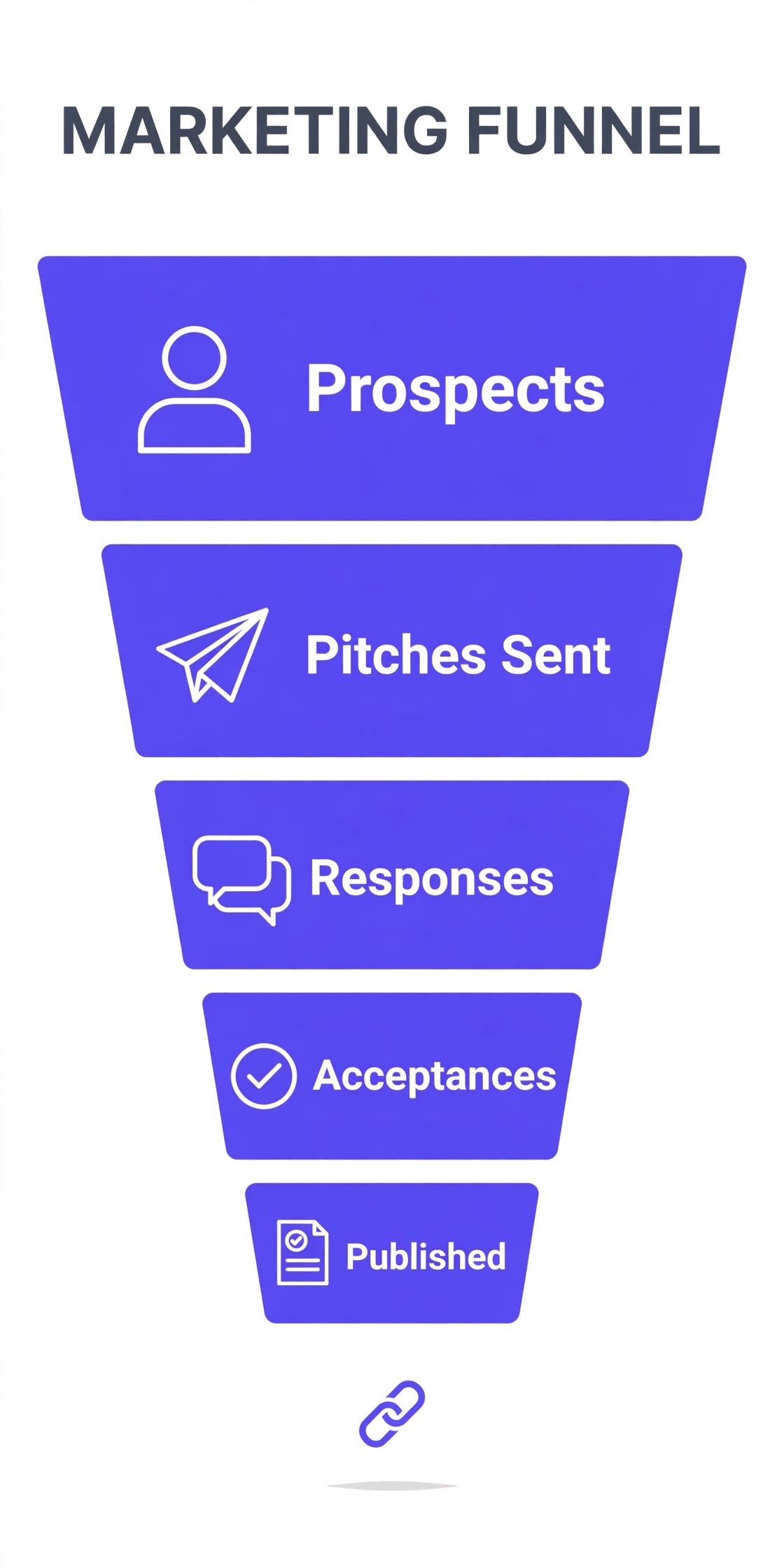
The funnel to track
Prospects → pitches → responses → acceptances → published → links live. Benchmarks: cold response 5–15%, pitch-to-acceptance 2–8%. 100 pitches → 2–8 published posts. Warm outreach roughly triples every rate.
Attribution honesty
Don’t claim one post caused a ranking jump. Show the timeline, the placements, the trend.
Link Velocity: How Many Guest Posts Per Month?
New sites (0–6 mo): 2–4/month. Growing (6–18 mo): 4–8/month. Established (18+ mo): 8–15+/month. What matters more: consistency beats bursts; diversity beats volume. Real talk: “100 guest posts/month” = farm links. Real outreach can’t produce that volume — that’s the point.
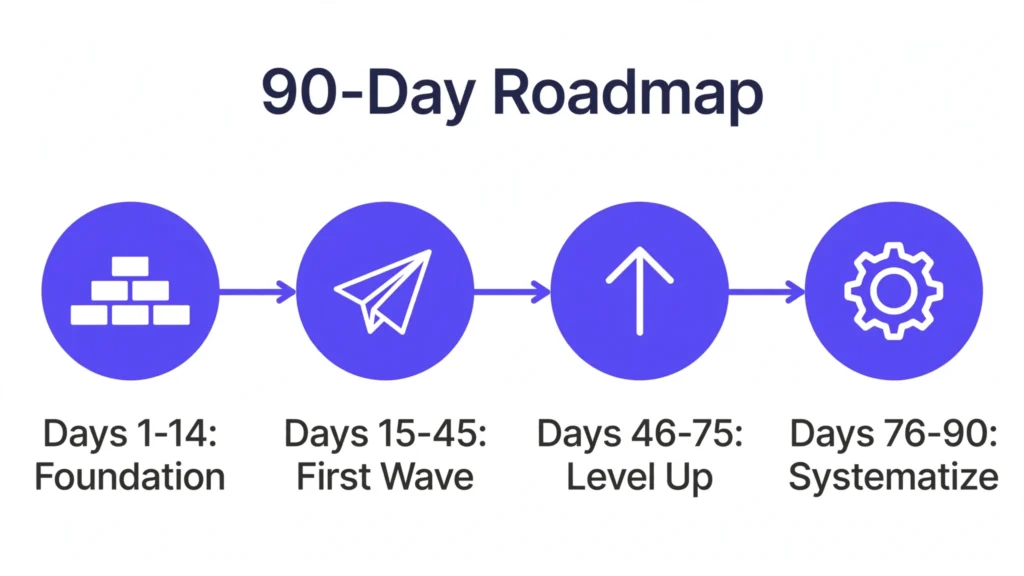
The 90-Day Guest Posting Plan (From Zero to System)
Days 1–14: Foundation — 100+ prospects, tracker setup, portfolio pieces. Days 15–45: First wave — 10–15 pitches/week to mid-tier sites; deliver fast. Aim: 5–8 published. Days 46–75: Level up — pitch bigger pubs with portfolio; start 20 editor relationships. Aim: 8–12 more. Days 76–90: Systematize — double down on winners, build recurring editor list, set 4–8 posts/month cadence.
Expected outcome: 15–25 published posts, 10–20 editors in your inventory, a repeatable system. That’s a link-building engine.
The Forgotten Tactic: Refreshing Old Guest Posts
Update and expand (“want the 2026 refresh?”) · add links to your newest content · reclaim broken links from URL changes. An hour of refreshing beats a week of cold pitching for ROI.
International & Multilingual Guest Posting
Less competition, stronger local relevance signals, cheaper placements. Hire native writers (never machine-translate), prospect with local operators ([niche] + "escribe para nosotros", [niche] + "gastbeitrag"). Real talk: international is the closest thing to arbitrage left in link building.
How Guest Posting Fits Your Overall Strategy
PR earns the spike; guest posting holds baseline velocity (digital PR guide). Every post can reference your linkable assets. HARO builds editor familiarity. 40-30-20-10 rule: 40% outreach/guest posting, 30% assets + PR, 20% HARO, 10% everything else.
The Ethics Chapter (Read Before You Scale)
Disclosure is non-negotiable: FTC requires it, Google penalizes undisclosed paid links. The line: genuine contributor content = white hat; “editorial fees” for guaranteed publication = gray; hacked/hidden/PBN links = black hat countdown. Real talk: every shortcut follows the same lifecycle — works, gets popular, gets detected, gets penalized. Buffer’s still standing. The farms aren’t.
Chapter 10: 7 Mistakes That Kill Guest Post Campaigns
Mistake 1: Pitching without reading the site
If you can’t name three recent articles, you’re not ready.
Mistake 2: Writing for your link instead of their readers
Fastest way to get rejected — or never invited back.
Mistake 3: Keyword-rich anchors everywhere
“Best cheap CRM software” across 20 sites is a penalizable pattern. Branded and natural. Always.
Mistake 4: Chasing metrics over audiences
DR 70 with zero traffic is a metric, not an opportunity.
Mistake 5: One-and-done relationships
The second post is 10x easier — schedule it.
Mistake 6: Ignoring the publication’s guidelines
Follow them exactly; you’re ahead of half the pitches.
Mistake 7: Giving up after 20 pitches
Twenty pitches is a warm-up. Winners send hundreds — each personalized.
The 10-Minute Daily Habit That Builds an Empire
Daily (10 min): engage with 3 target editors’ content. Weekly (1 hr): 5 personalized pitches. Monthly (half day): review funnel, refresh old posts, pitch 2 dream pubs. Result: 3–5 quality placements/month within a quarter. The math: 250 pitches/year × 5% = 12 permanent assets. Nobody outworks compound interest.
Don’t Be the 99%
99% quit after a dozen ignored pitches — or buy cheap placements on dead sites and wonder why nothing ranks.
The 1% do the unglamorous work: read the publications, write clickable headlines, follow up, nurture editors, publish content so good the link is an afterthought.
Buffer didn’t build 114,000 referring domains with shortcuts. One genuinely useful article at a time — on other people’s platforms, for other people’s readers — until the audience became the brand became the links.
Your first guest post won’t change your rankings. Your fiftieth might change your business.
And remember Buffer’s compounding secret: today’s guest post can still earn links a decade from now. You’re not buying a link — you’re planting an asset.
Start pitching this week. The editors are waiting.
Keep Reading
- White Hat Link Building: The Complete 2026 Guide — the full playbook guest posting fits into.
- Digital PR for Link Building — the earned-media strategy that pairs perfectly with outreach.
- Free Website Audit — make sure your site deserves the links you’re earning.
What is guest posting in SEO?
Guest posting is writing an article for another website in exchange for exposure and usually a backlink to your site. In 2026, effective guest posting means genuinely useful articles on real publications with real audiences — not paid filler on link farms, which Google’s spam policies explicitly target.
Does guest posting still work in 2026?
Yes. Real guest posting on quality publications remains one of the most effective white-hat link strategies. What died is the spam version — thin paid posts on link farms. Google can’t eliminate genuine contributor content without breaking the web, so editorial guest posts continue to pass real ranking power.
How do I find websites that accept guest posts?
Use Google search operators like [niche] + “write for us”, mine competitors’ backlinks for sites they’ve guest posted on, target sites already linking to your niche, and browse “best blogs” listicles. Always qualify prospects by checking organic traffic, engagement, editorial standards, and link policies.
How much does guest posting cost?
DIY outreach costs mainly your time — roughly 5-10 hours per published post including prospecting, pitching, and writing. Marketplace placements run $100-$1,000+ per post depending on site quality. Agencies typically charge $200-$600 per vetted placement. Avoid anything under $50 — it’s almost certainly a link farm.
How many guest posts do I need to rank?
There’s no magic number — it depends on competition, your site’s authority, and placement quality. Five guest posts on high-authority relevant sites can outperform fifty on weak ones. Track rankings for target pages over 30-90 days and scale what moves the needle.
What’s the difference between guest posting and blogger outreach?
Guest posting is writing a full article for another site. Blogger outreach is the broader relationship strategy — it includes guest posts plus expert quotes, collaborations, link insertions, and anything else built on relationships with bloggers and editors. Think of outreach as the strategy and guest posting as its best tactic.